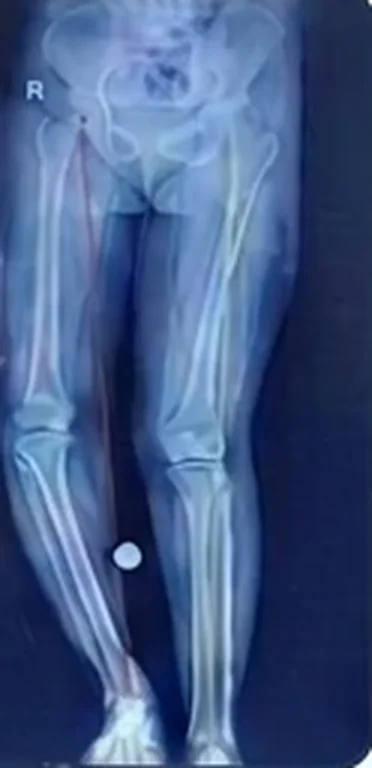
Presentation: a young adult with knock knees (genu valgum) and a shorter leg, with knee pain, the knees touching while the ankles stayed apart, and an uneven walk.
Findings: full-length standing X-rays measured both problems: the angle of the deformity (mainly at the lower thigh bone) and the difference in leg length. Planning on these films shows exactly where, and by how much, to correct.
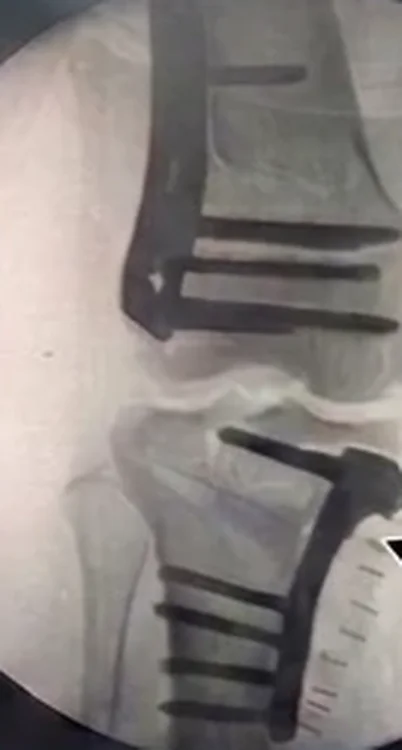
Procedure: alignment correction combined with lengthening: the thigh bone was cut in a controlled way (osteotomy) to straighten the leg so the weight-bearing line passes through the centre of the knee, and the bone was lengthened to even out the leg lengths, with fixation to hold the corrected position while new bone formed.
Recovery: protected weight-bearing and physiotherapy to keep the knee moving, with X-rays until the bone was strong, then gradual return to normal activity.
Why it matters: correcting both the angle and the length in one plan improves walking and reduces abnormal load on the knee, which may lower the risk of early arthritis. Read more about knock knees, bow legs and leg-length difference and bone lengthening.
For patient education only. Illustrative problems are shared with written patient consent, with identifying details removed. Every patient is different and individual outcomes vary.



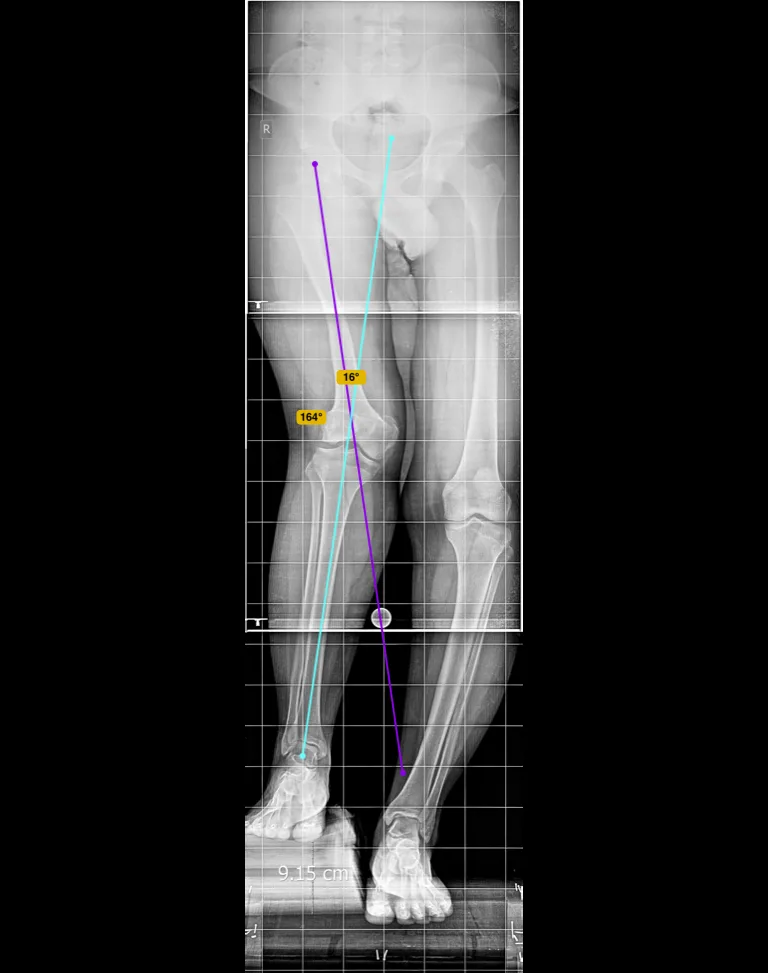
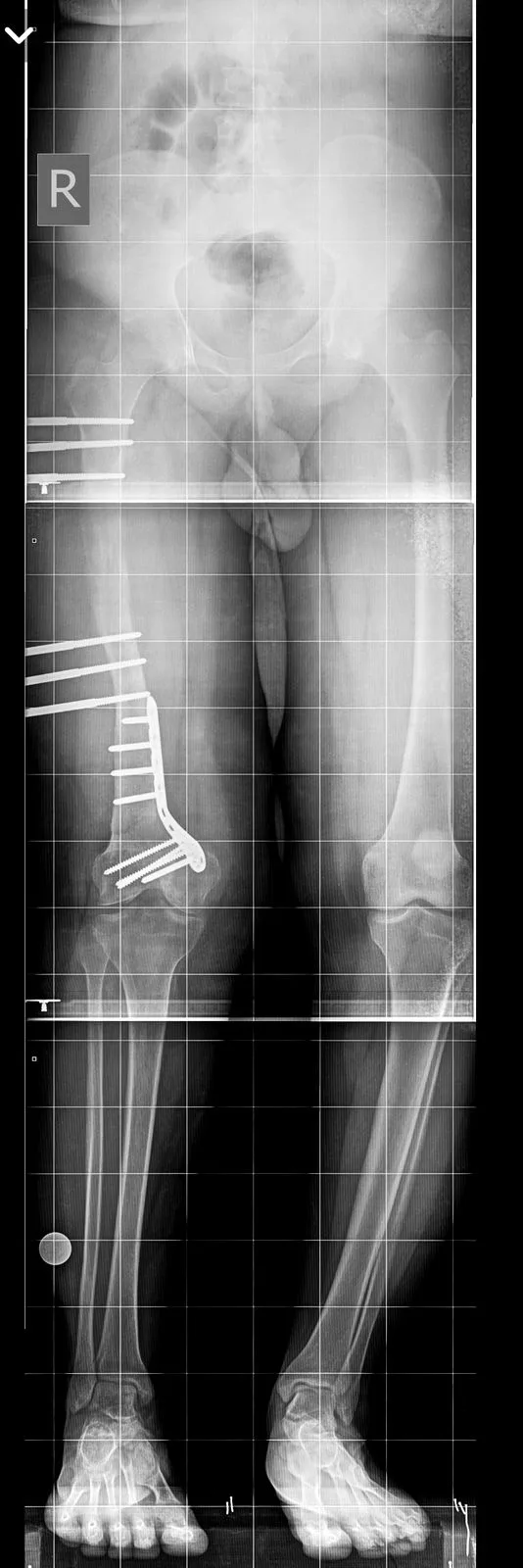
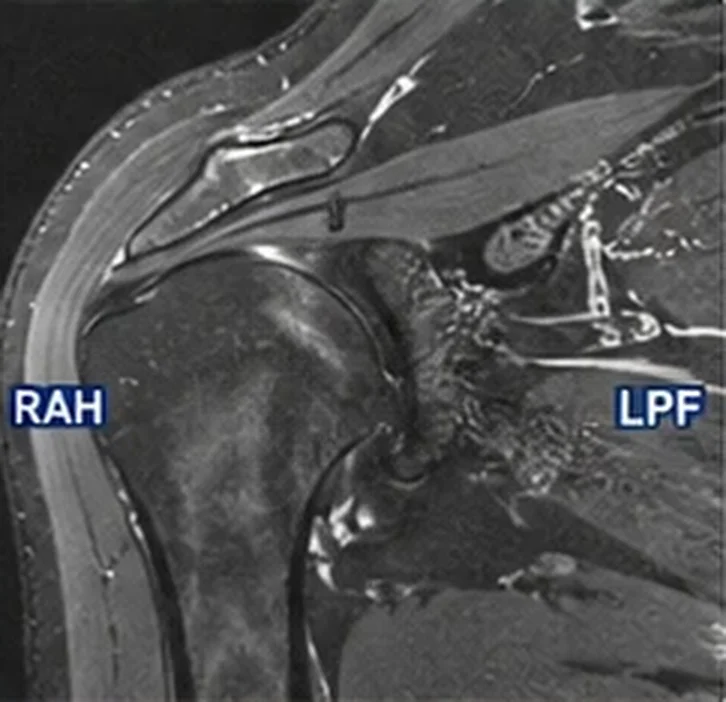 Problem
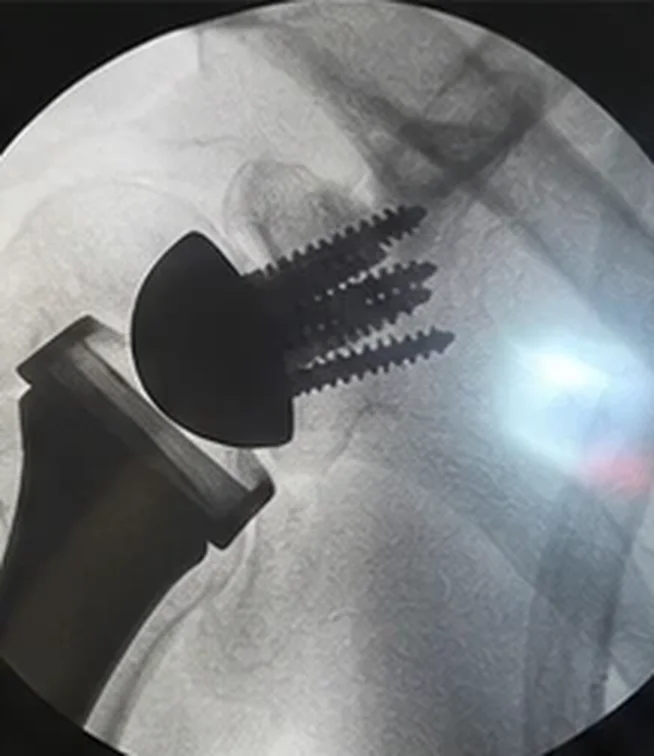 Solution