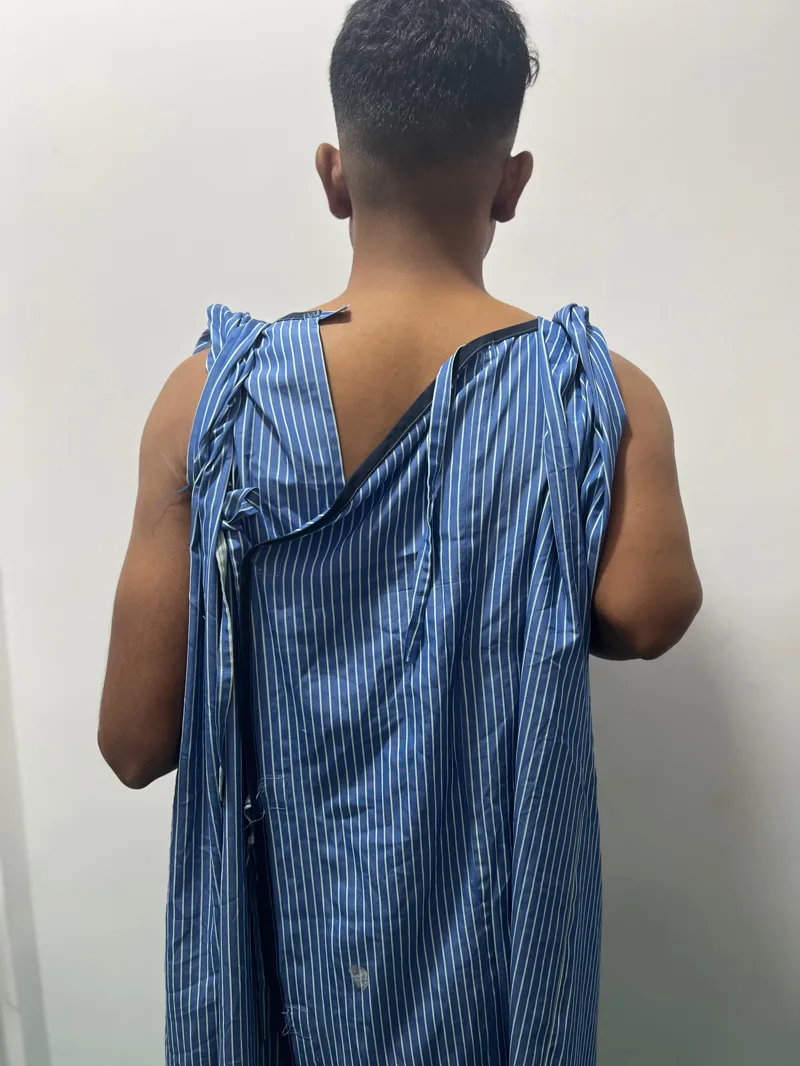
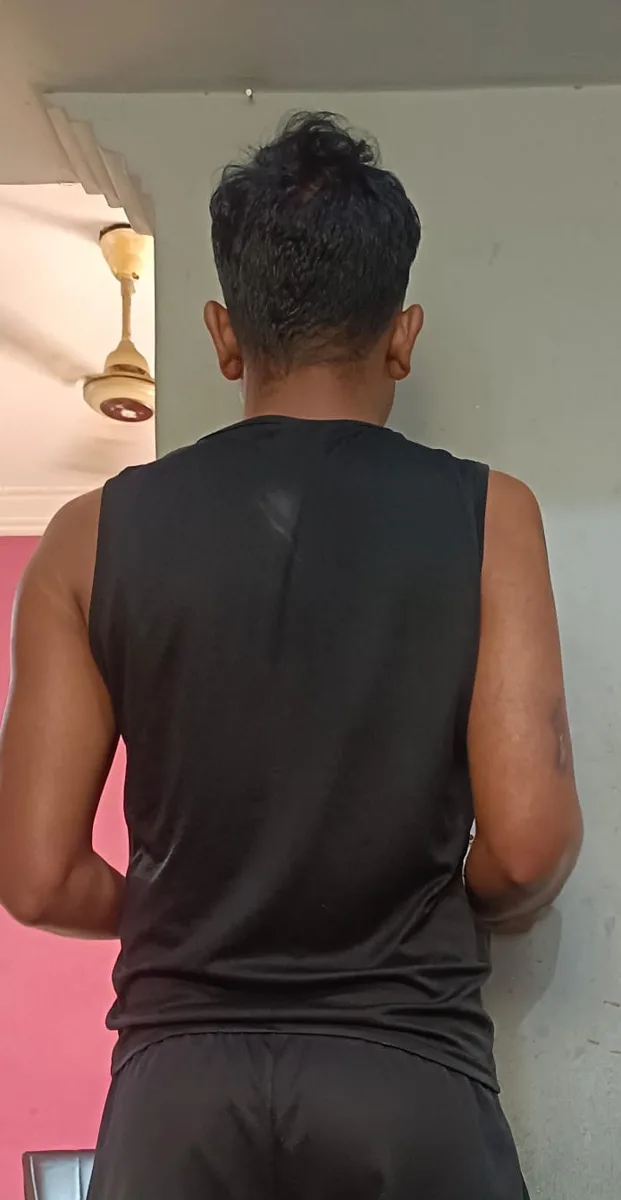
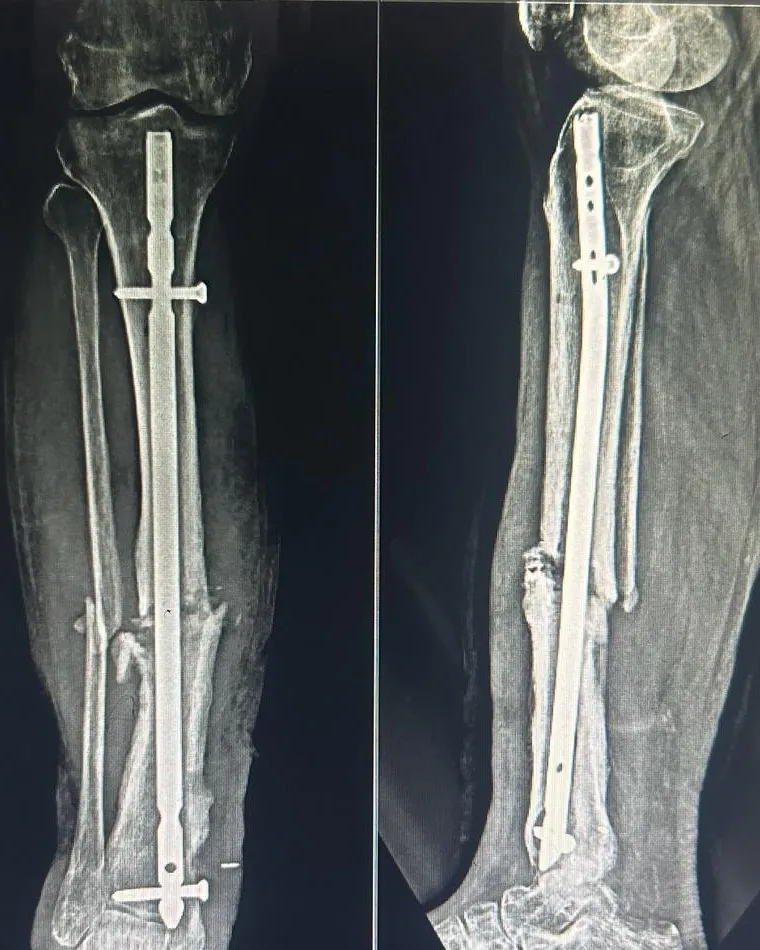
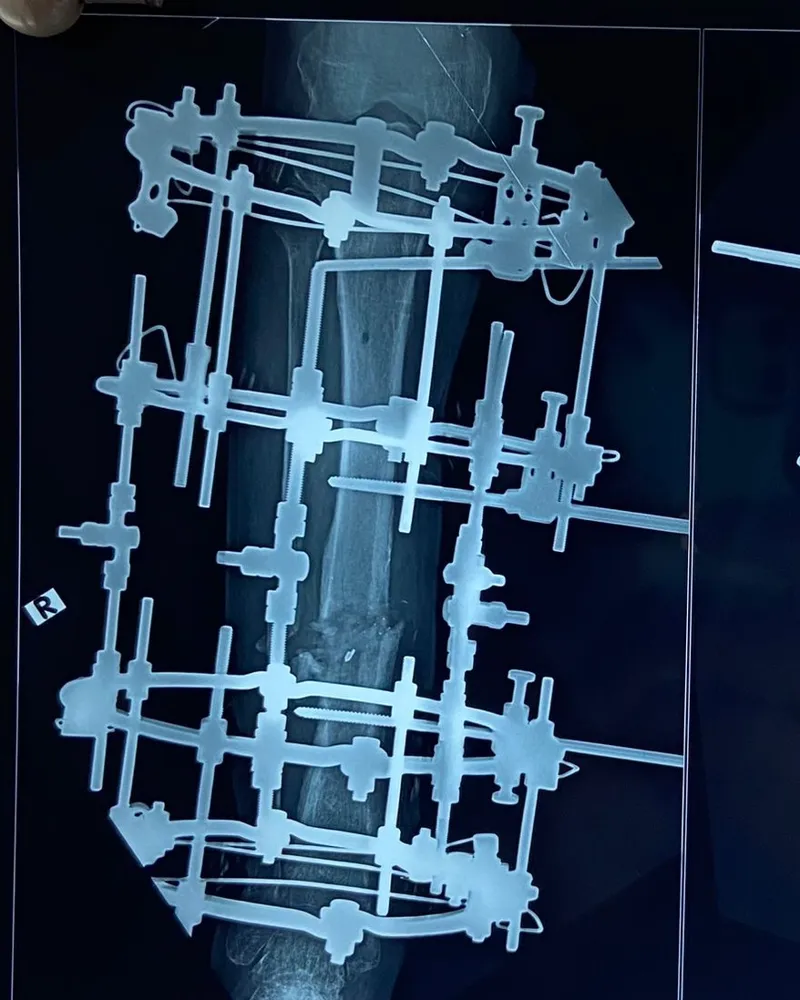
Presentation: shoulder pain, including at night, with weakness and difficulty lifting the arm for daily activities.
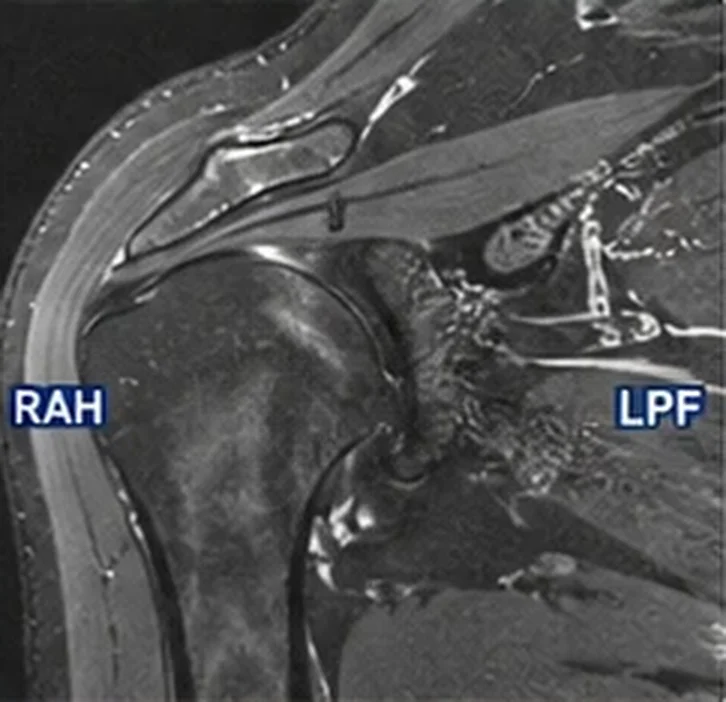
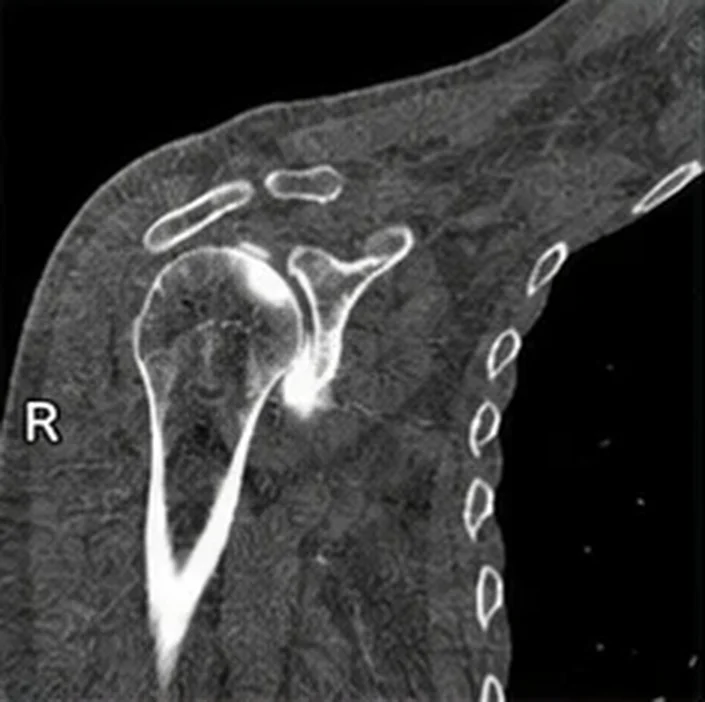
Findings: MRI showed a massive, irreparable rotator cuff tear. CT showed arthritis of the shoulder joint caused by the long-standing tear (cuff tear arthropathy): without the cuff, the ball of the shoulder rides upward and wears the joint.
How a cuff tear leads to arthritis: a massive tear → loss of normal stability and upward movement of the ball → progressive wear and arthritis → pain, weakness and loss of the ability to lift the arm.
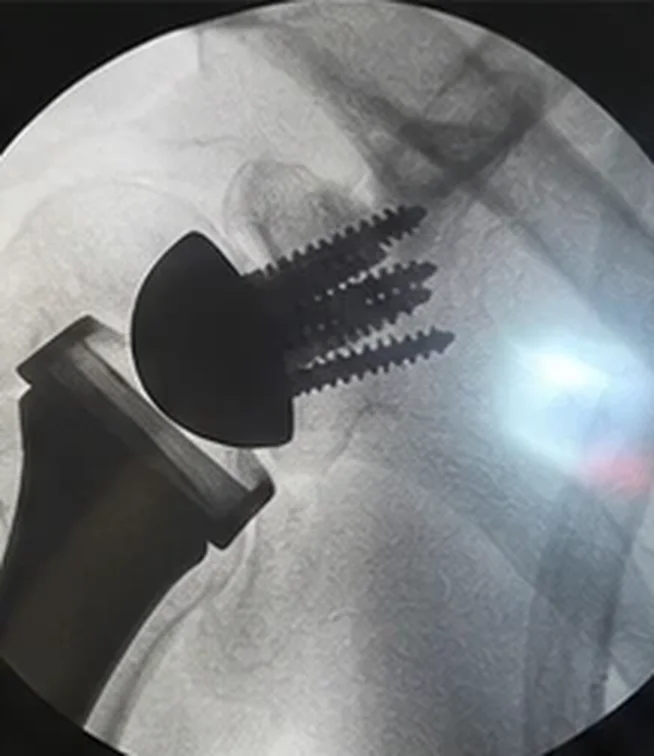
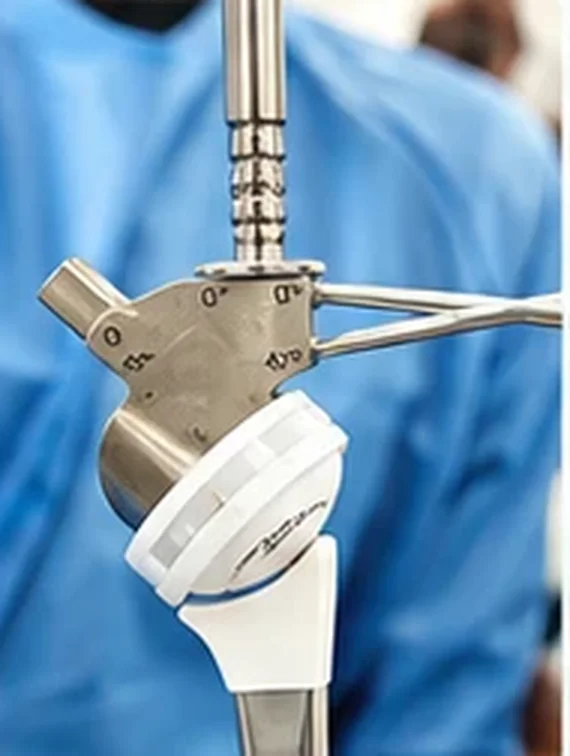
Procedure: reverse total shoulder replacement, in which the ball and socket are swapped. This lets the deltoid muscle lift the arm even though the rotator cuff cannot be repaired.
Recovery: a sling for the first weeks, then guided physiotherapy to regain movement and strength.
Why it matters: in appropriately selected patients, a reverse shoulder replacement can relieve pain and restore useful shoulder function when the cuff can no longer be repaired. Every shoulder needs proper clinical examination and imaging before deciding. Read more about reverse shoulder replacement and rotator cuff tears.
For patient education only. Illustrative problems are shared with written patient consent, with identifying details removed. Every patient is different and individual outcomes vary.


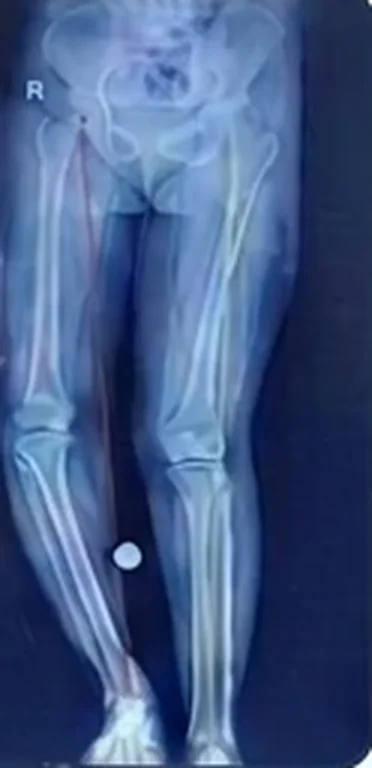 Problem
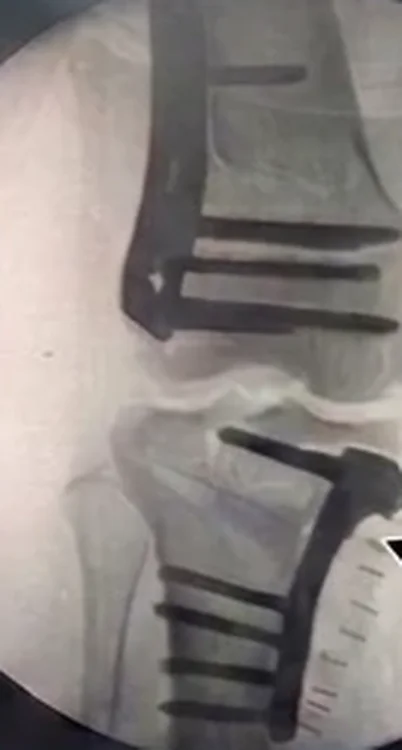 Solution