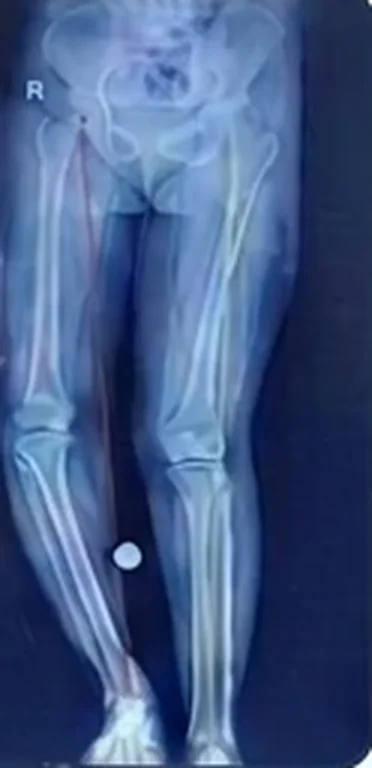
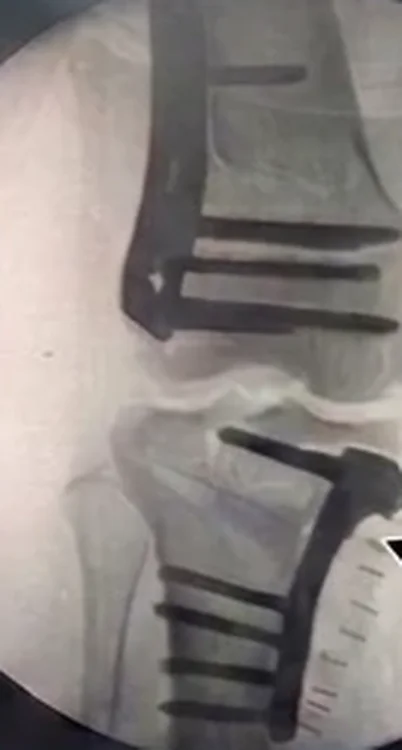
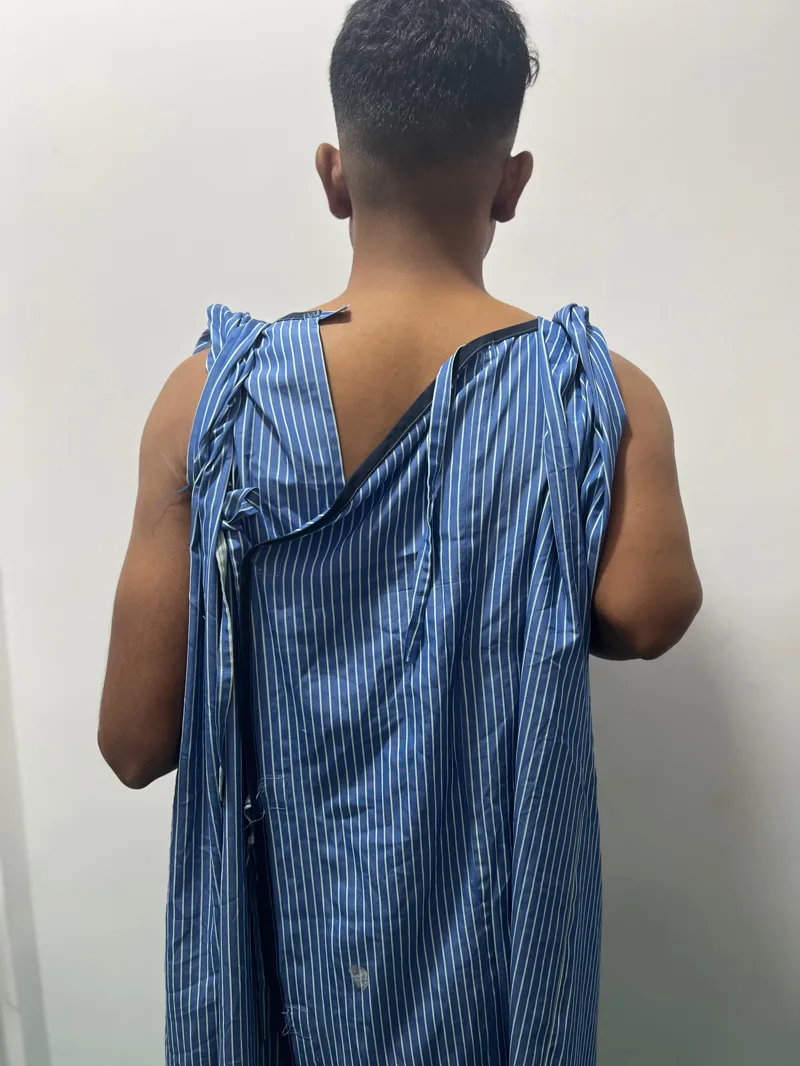
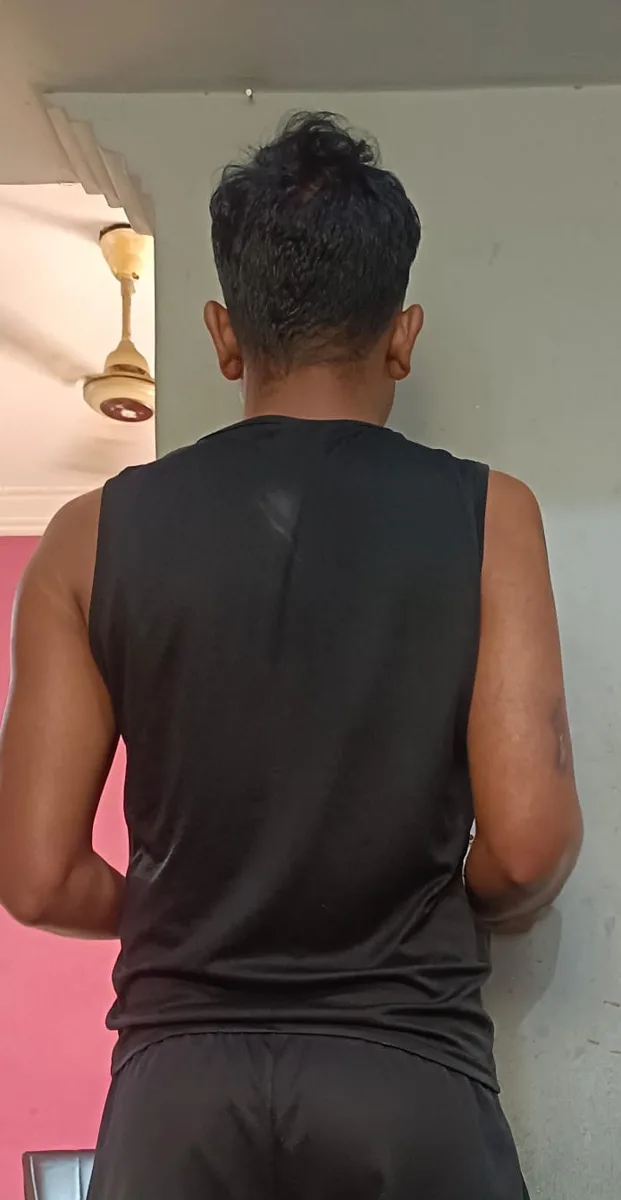
Presentation: a man in his early twenties with a right upper arm about 9 cm shorter than the left. He had an injury near the shoulder (proximal humerus) in infancy that was never treated, so the growth plate stopped working normally.
Findings: a well-healed but short humerus, good shoulder and elbow movement, and healthy soft tissues — a good situation for gradual lengthening.
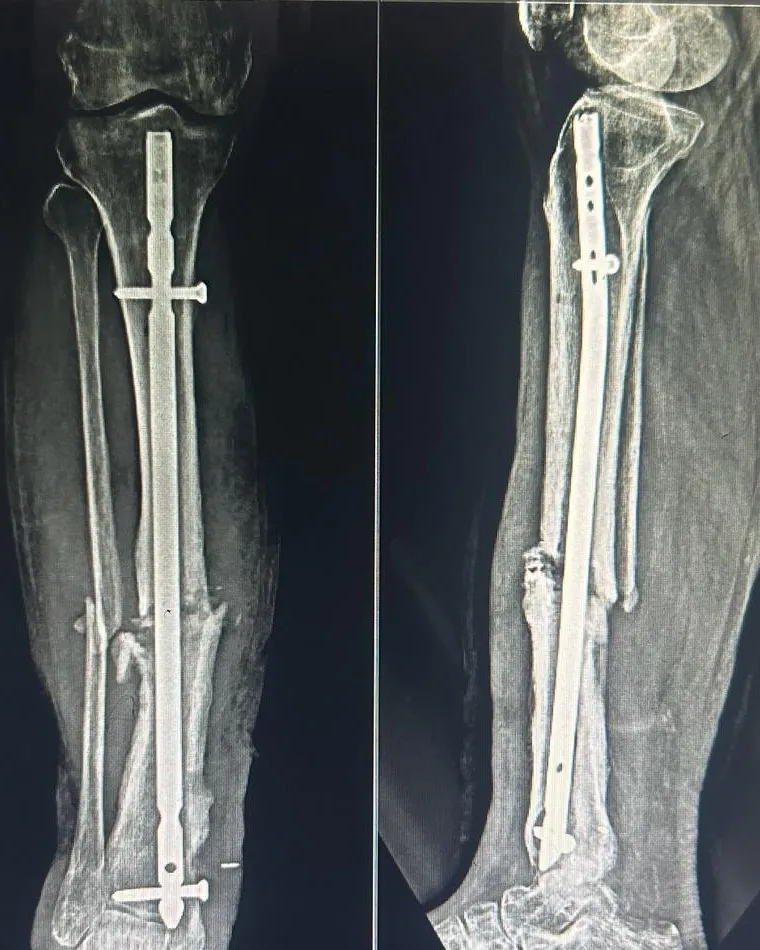
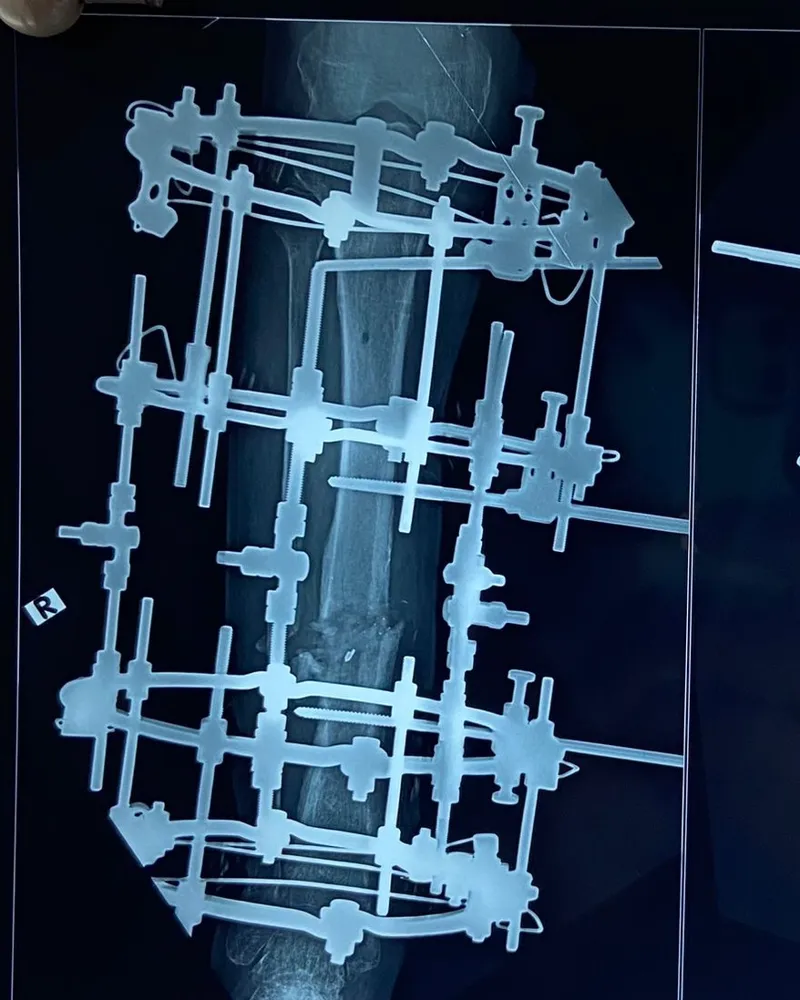
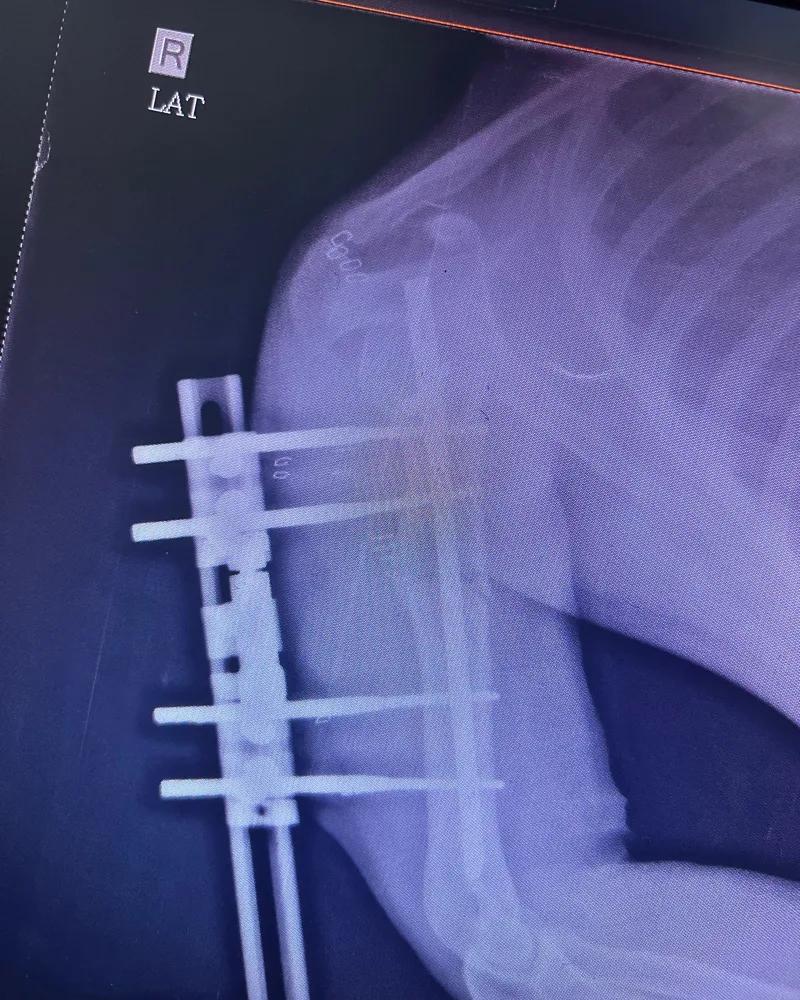
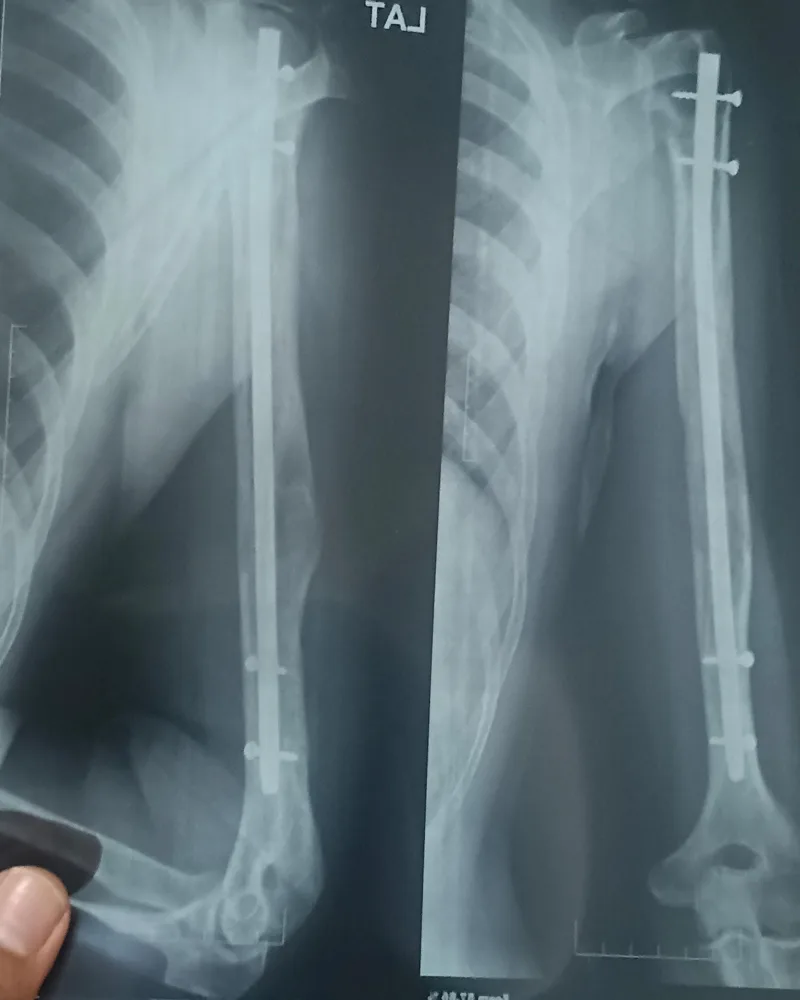
Procedure: lengthening over nail (LON). A thin nail was placed inside the bone and an external fixator applied outside. After a small, controlled cut in the bone (corticotomy), the frame was adjusted by about 1 mm a day so new bone formed in the gap. Once the target length was reached, the nail was locked and the frame removed early, which shortens the time in the frame.
Recovery: shoulder and elbow exercises continued throughout lengthening. The new bone was watched on X-rays until it was strong enough to take load.
Why it matters: limb-length differences after childhood injuries can be corrected even in adulthood. Read more about limb deformity correction and bone transport and lengthening.
For patient education only. Illustrative problems are shared with written patient consent, with identifying details removed. Every patient is different and individual outcomes vary.


 Problem
 Solution