


 By Dr. Himanshu Singh, MBBS, D'Ortho, DNB (Orthopaedics)
The labrum is a ring of tough cartilage that lines the rim of the shoulder socket. It deepens the shallow socket, anchors the biceps tendon at the top, and holds the ligaments that stabilise the joint. Tears of the labrum cause pain, clicking and — depending on the location — instability.
Types of labral tears
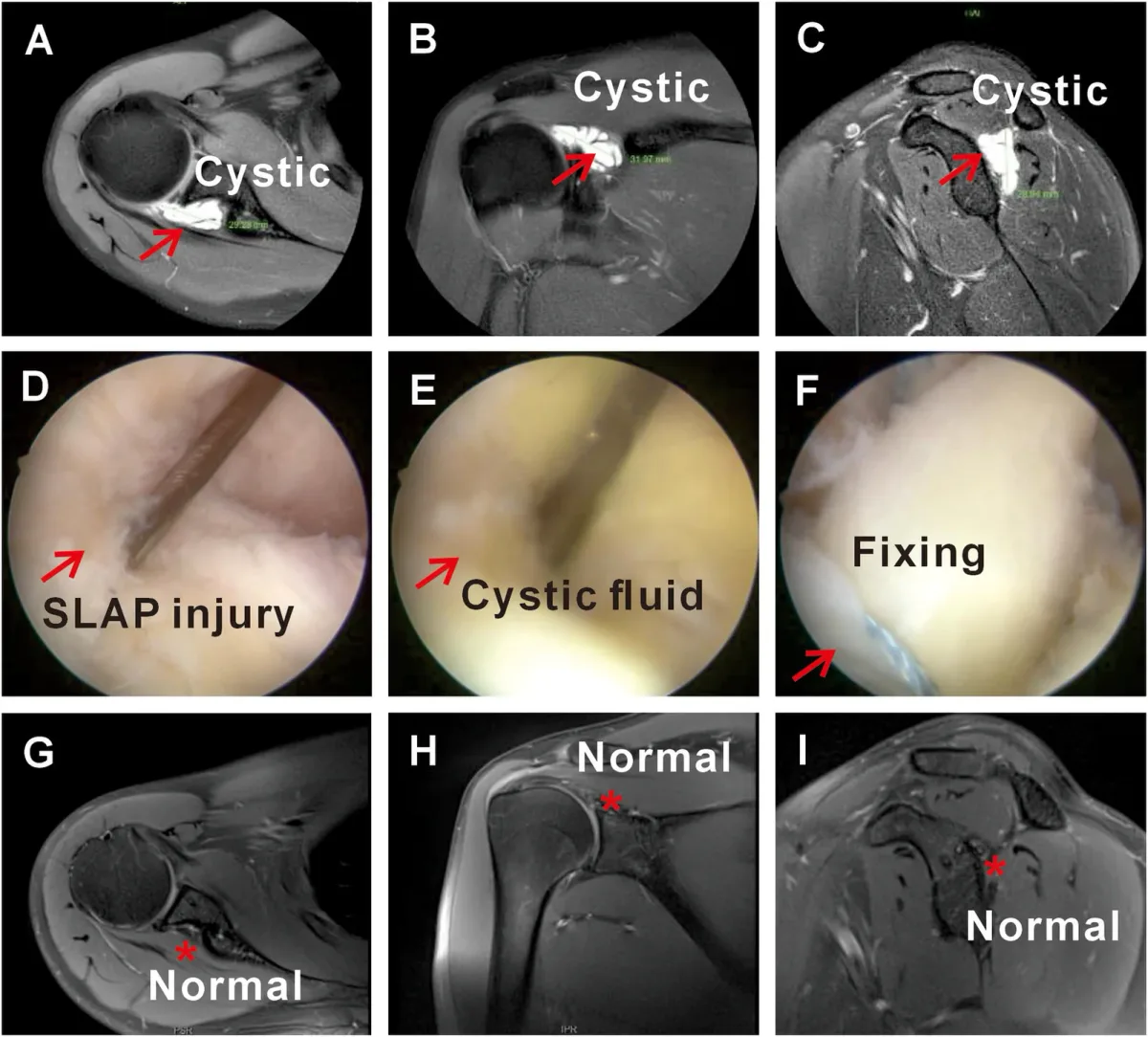
SLAP tear (Superior Labrum Anterior to Posterior)
A tear at the top of the labrum, where the long head of the biceps attaches. Common in overhead athletes (cricket bowlers, throwers, swimmers, badminton players), weightlifters, and after falls on an outstretched arm.
Bankart lesion
A tear of the front-lower labrum, almost always caused by a shoulder dislocation. It leads to recurrent dislocation or a feeling the shoulder may slip out. Treatment is covered in arthroscopic Bankart repair.
Posterior labral tear
Less common; seen in weightlifters (bench press), rugby players and after posterior dislocations — causes pain and posterior instability.
Symptoms
- Deep, hard-to-pinpoint shoulder pain
- Clicking, popping or catching
- Pain with overhead movements, throwing or lifting
- Loss of throwing velocity or power ("dead arm")
- Instability — the shoulder feels loose or slips out (mainly Bankart tears)
Diagnosis
Specific examination tests guide suspicion. An MR arthrogram is more accurate than a plain MRI for labral tears.[2] A 3D CT scan is added after dislocations to measure any bone loss. Associated rotator cuff or biceps problems are assessed at the same time.
Treatment
Physiotherapy first — for most SLAP tears
Strengthening the rotator cuff and shoulder-blade muscles, restoring posterior shoulder flexibility, and correcting throwing mechanics. Many patients return to sport without surgery.
Arthroscopic labral repair
When pain or instability persists, the torn labrum is reattached to bone with small suture anchors through keyhole incisions. This is the standard treatment for Bankart lesions causing instability — see arthroscopic Bankart repair.
Biceps tenodesis
For SLAP tears in older patients, or where the biceps anchor is degenerate, moving the biceps tendon attachment (tenodesis) is often preferred to a SLAP repair. In one comparative study, more patients were satisfied and returned to sport after tenodesis than after repair.[1]
Recovery
Typical timeline in my practice; your plan may differ.
- Sling for about 4–6 weeks after repair
- Gradual movement, then strengthening from 6–12 weeks
- Return to throwing or contact sport around 4–6 months
See the shoulder recovery guide.
Getting the right diagnosis
Labral tears are common incidental findings on scans, especially with age, and not every tear is the cause of pain. Matching the scan to the examination and your symptoms is key to choosing the right treatment — and avoiding unnecessary surgery.
References
- Boileau P, Parratte S, Chuinard C, et al. Arthroscopic treatment of isolated type II SLAP lesions: biceps tenodesis as an alternative to reinsertion. Am J Sports Med. 2009;37(5):929-36. PMID 19229046. pubmed.ncbi.nlm.nih.gov/19229046/
- Smith TO, Drew BT, Toms AP. A meta-analysis of the diagnostic test accuracy of MRA and MRI for the detection of glenoid labral injury. Arch Orthop Trauma Surg. 2012;132(7):905-19. PMID 22395821. pubmed.ncbi.nlm.nih.gov/22395821/
Frequently asked questions
What is the difference between a SLAP tear and a Bankart tear?
A SLAP tear involves the top of the labrum where the biceps tendon attaches, and often causes pain with overhead or throwing activities. A Bankart tear affects the front-lower labrum and is usually caused by a dislocation, leading to instability.
Do labral tears need surgery?
Many SLAP tears, especially in people over 35 or those not involved in overhead sport, improve with physiotherapy. Bankart tears causing recurrent dislocation usually need stabilisation surgery.
Which scan is best for a labral tear?
An MR arthrogram — an MRI performed after injecting contrast into the joint — is more accurate than a plain MRI for labral tears in pooled studies, although a good-quality MRI may show larger tears.
Medical disclaimer: this article is general information, not a diagnosis. Every injury is different — please consult an orthopaedic surgeon with your scans before deciding on treatment.