


 By Dr. Himanshu Singh, MBBS, D'Ortho, DNB (Orthopaedics)
Total knee replacement (TKR), also called total knee arthroplasty, resurfaces the worn ends of the thigh bone (femur) and shin bone (tibia) with metal components, separated by a smooth, high-grade polyethylene insert. The kneecap may also be resurfaced. It is one of the most successful operations in medicine for relieving arthritis pain and restoring a straight, stable knee.
Signs it may be time
- Knee pain that limits walking distance, stairs or getting up from a chair
- Night pain or pain at rest that disturbs sleep
- Increasing bow-leg (varus) or knock-knee (valgus) deformity
- A knee that will not fully straighten or bend
- Medicines, physiotherapy, weight loss and injections have stopped helping
- X-rays show bone-on-bone arthritis
Pain and limitation, not X-rays alone, decide the timing. Many people with arthritic X-rays manage well without surgery for years.
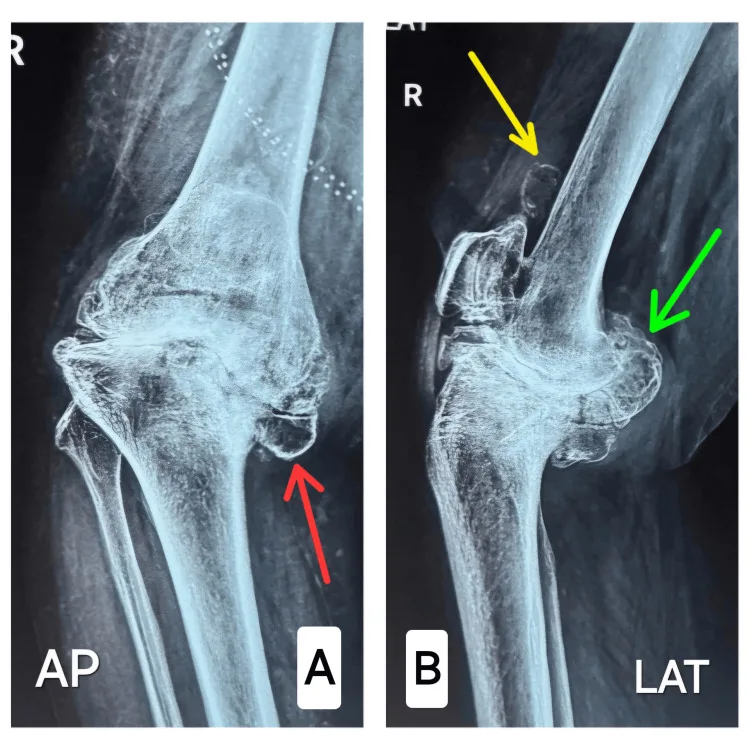
Alternatives worth considering first
Not every arthritic knee needs a total replacement:
- High tibial osteotomy (HTO) for active patients with bow legs and arthritis confined to the inner side
- Double-level osteotomy when the deformity comes from both the thigh and shin bones
- Partial (unicompartmental) knee replacement when only one compartment is worn and the ligaments are intact
Assessment before surgery
- Standing X-rays of the knee and a full-length leg X-ray to measure alignment
- Blood tests, ECG and an anaesthetic check-up; diabetes, blood pressure and anaemia are optimised
- Dental or skin infections are treated first, to protect the new joint
- A pre-operative physiotherapy session to learn exercises and walker use
The operation
The operation takes about 1–1.5 hours per knee, usually under spinal anaesthesia with a nerve block for pain relief.
- Navigation and robotic-assisted techniques help place the implants precisely and balance the ligaments, for a well-aligned knee
- Damaged bone and cartilage are removed and replaced with implants fixed with bone cement
- Deformities (bow legs or knock knees) are corrected as part of the operation
- Modern pain-control protocols allow walking within 24 hours
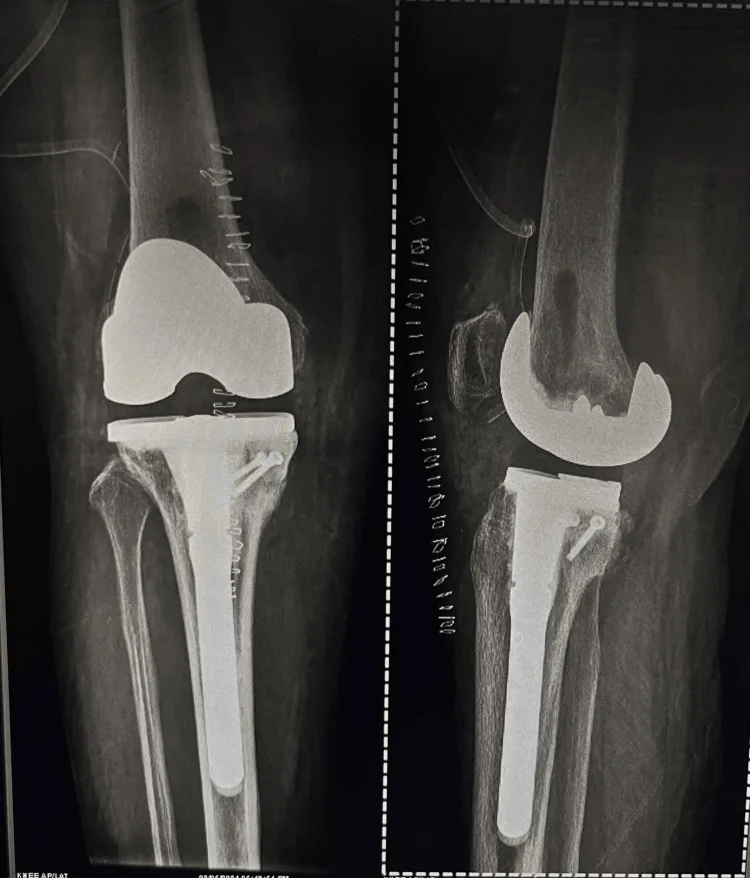
Recovery timeline
Typical timeline in my practice; your plan may differ.
| Time after surgery | What to expect |
|---|---|
| Day 0–1 | Stand and walk with a walker; knee bending exercises begin |
| Day 3–5 | Discharge home once walking safely and managing stairs |
| 2 weeks | Wound check and suture or staple removal |
| 4–6 weeks | Walking with a stick or independently; driving an automatic car |
| 3 months | Most daily activities comfortable; swelling settling |
| 6–12 months | Final result; knee continues to improve |
See the knee recovery guide for exercises and precautions.
Risks, explained honestly
Knee replacement is safe, but every operation carries risk. These include infection (uncommon, and reduced by strict theatre protocols and antibiotics), blood clots (prevented with early walking and blood thinners), stiffness, persistent pain in a small number of patients, and wear or loosening many years later. Your individual risk is discussed in clinic.
Life after a knee replacement
Walking, cycling, swimming, gardening, travel and sitting cross-legged on a chair are all encouraged. Sitting on the floor and squatting are possible for some patients with a high-flexion knee, but are discussed individually. Jumping and high-impact running are best avoided to protect the implant.
Frequently asked questions
What is the right age for a knee replacement?
There is no fixed age. The decision depends on how much the arthritis limits your daily life, what X-rays show, and whether simpler treatments have stopped working. Younger, active patients with arthritis on one side of the knee may be better suited to an osteotomy or partial knee replacement.
How long does a knee replacement last?
Most modern knee replacements continue to work well for 15 to 20 years or more. Good alignment at surgery, a healthy weight and staying active help the implant last.
When can I walk after knee replacement?
Most patients stand and walk with a walker on the day of surgery or the next day. Stairs are usually managed before discharge, and most people walk independently by 4 to 6 weeks.
Should both knees be replaced together?
Replacing both knees in one sitting is possible for fit patients with severe arthritis on both sides. It means one admission and one rehabilitation period, but it is a bigger operation, so it is decided after a full medical assessment.
Medical disclaimer: this article is general information, not a diagnosis. Every injury is different — please consult an orthopaedic surgeon with your scans before deciding on treatment.