


 By Dr. Himanshu Singh, MBBS, D'Ortho, DNB (Orthopaedics)
Limb deformity means a bone is bent, twisted or shorter than it should be. It can be present from birth, develop during growth, or follow injury, infection or conditions like rickets. Even modest deformity can change how load passes through the knee and ankle, leading to pain, limp and early arthritis.
Common deformities
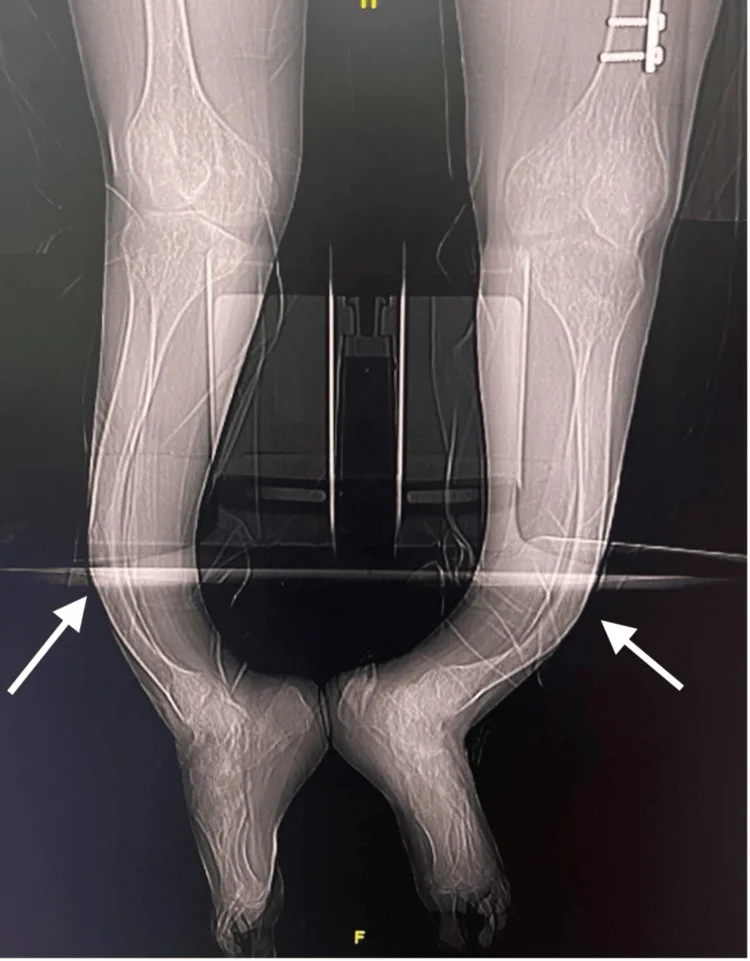
- Genu varum (bow legs): knees apart when ankles are together — overloads the inner knee.
- Genu valgum (knock knees): knees touch while ankles are apart — overloads the outer knee and can cause kneecap problems.
- Limb length discrepancy: one leg shorter, causing limp, back pain and pelvic tilt.
- Rotational deformity: in-toeing or out-toeing beyond the normal range.
- Post-traumatic deformity: see malunion.
Causes
Developmental conditions, nutritional and genetic rickets, Blount's disease, skeletal dysplasias, growth-plate injury, infection in childhood, healed fractures and congenital limb deficiencies.
How deformity is assessed
- Clinical examination — gait, alignment, rotation, joint mobility, block test for length.
- Full-length standing X-rays — measure the mechanical axis and joint angles (mLDFA, MPTA and others).
- CT scanogram / rotational CT when twist or precise length matters.
- Blood tests — calcium, phosphate, vitamin D, alkaline phosphatase where rickets is suspected.
Precise measurement identifies the exact level and size of correction — the foundation of a good result.
Treatment options
Children: guided growth
While growth plates are open, small 8-plates or staples on one side of the growth plate can gradually straighten the limb as the child grows — a minor procedure with quick recovery.
Adults: corrective osteotomy
The bone is cut at the planned level and realigned. Examples:
- High tibial osteotomy (HTO) for bow legs with inner-knee pain
- Double-level osteotomy (DLO) when a bow leg comes from both the thigh bone and the shin bone
- Distal femoral osteotomy (DFO) or medial closing wedge osteotomy (MCWO) for knock knees
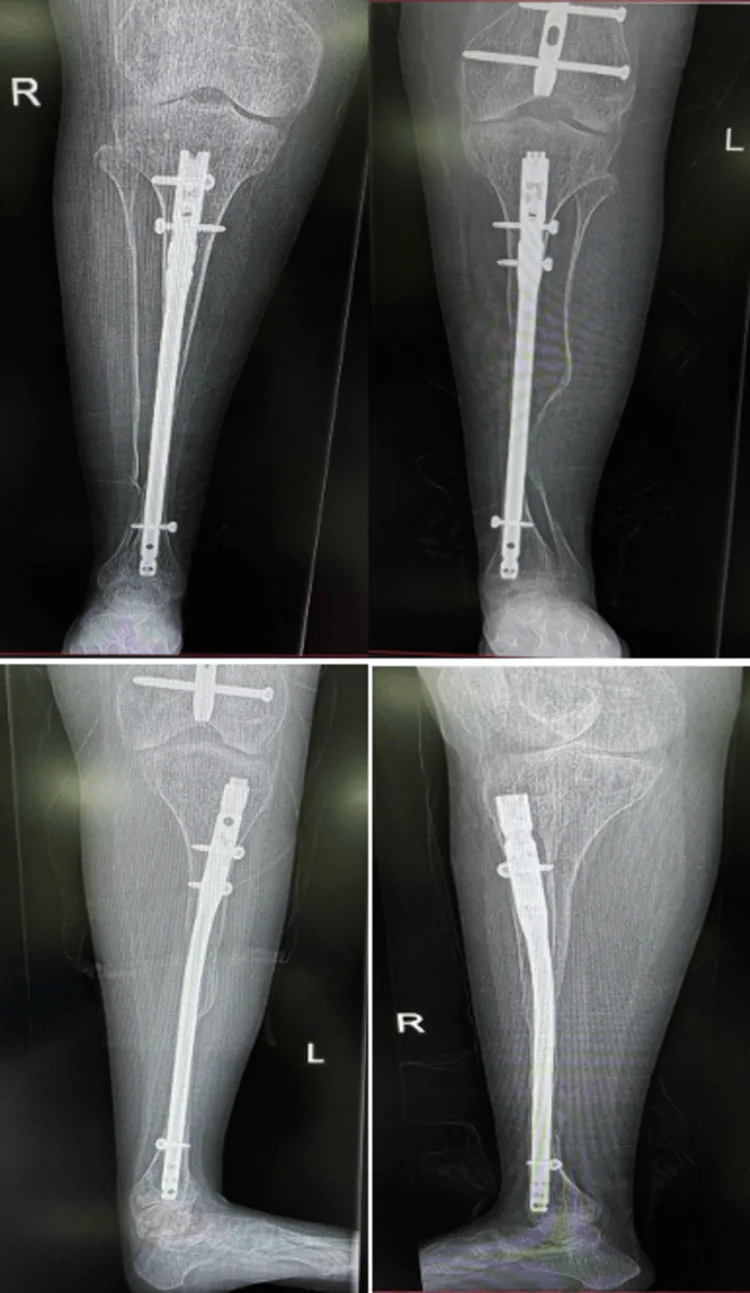
Fixation is with a plate, nail or external fixator.
Gradual correction: Ilizarov, LRS and hexapod frames
Large, multi-plane deformities, or deformity with shortening, are corrected gradually. Hexapod frames use computer planning to correct angulation, rotation and length simultaneously and precisely.
Limb lengthening
Shortening is treated with distraction osteogenesis — lengthening by about 1 mm per day. Techniques such as lengthening over nail (LON) and LRS rail systems reduce the time in an external frame; fixator-free lengthening is possible in selected bones such as the humerus.
See a real case
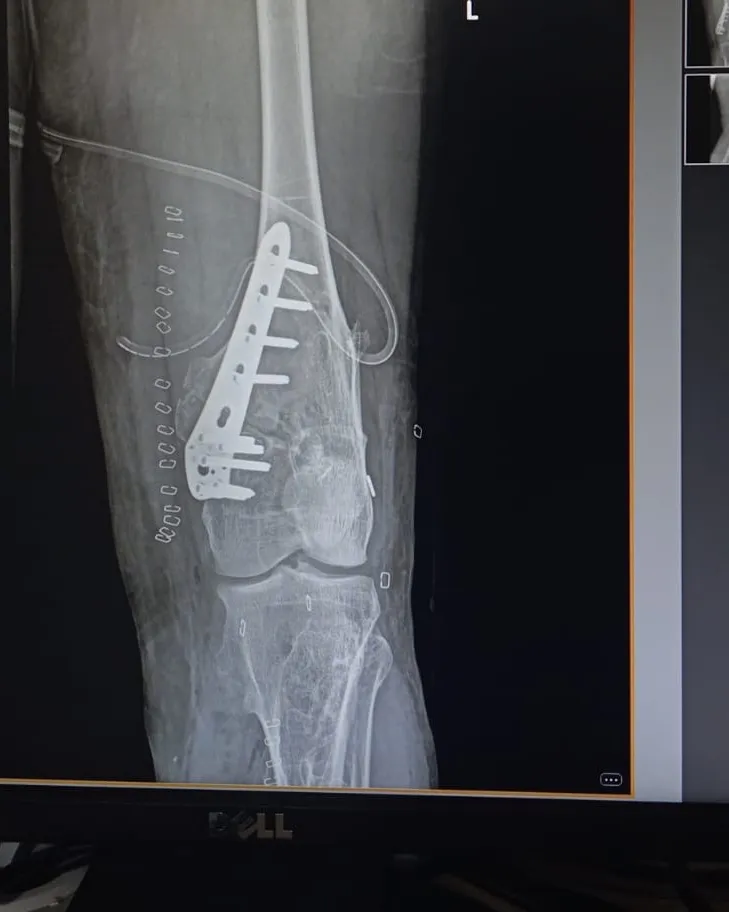
Distal femoral osteotomy + ACL reconstruction + lateral meniscus surgery
Knock knee with ACL and discoid meniscus tear: realignment plus ligament surgery
A man in his thirties with hereditary bony growths (MHE), knock knee, an ACL tear and a flipped discoid lateral meniscus. The alignment and the ligament were corrected together.
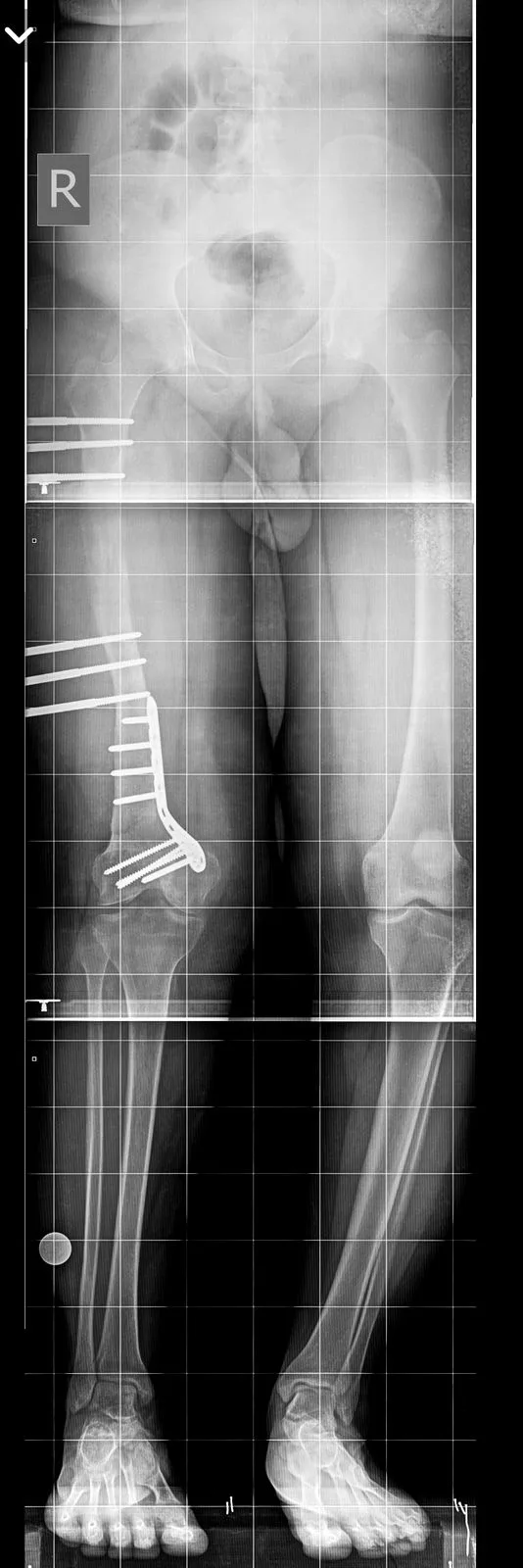
Deformity (alignment) correction with limb lengthening
Knock knees with a short leg: alignment correction and lengthening
A young adult with knock knees and a shorter leg, causing knee pain and an uneven walk. Both the alignment and the length were corrected, planned on full-length standing X-rays.
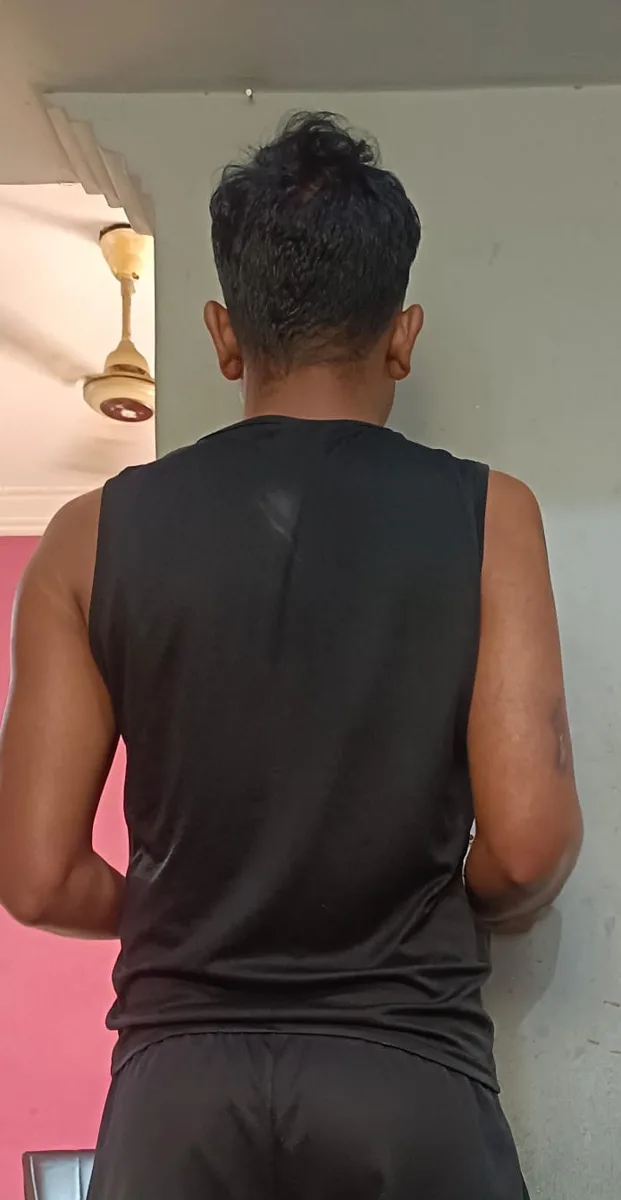
Lengthening over nail (LON) with external fixator
Short upper arm after a childhood injury: humerus lengthening over a nail
A young man's right arm was 9 cm shorter after an untreated injury near the shoulder in infancy. The bone was gradually lengthened over an internal nail.
Shared with written patient consent, identifying details removed. Individual outcomes vary.
Recovery
Typical timeline in my practice; your plan may differ.
Most patients walk soon after surgery. Physiotherapy maintains knee and ankle movement during correction. Healing is confirmed on X-ray before the frame or protection is removed.
When to seek an opinion
- Deformity that is worsening, one-sided, or causing pain or limp
- A leg length difference of more than about 2 cm
- Knee pain with visible bowing or knock knees
- A child whose legs have not straightened by the expected age
Bring previous X-rays and blood reports. A full-length standing X-ray is usually the first test needed.
Frequently asked questions
Are bow legs and knock knees normal in children?
Yes, up to a point. Bow legs are normal under about 2 years, and mild knock knees are common between 3 and 7 years. Deformity that is severe, one-sided, worsening or persisting beyond these ages should be assessed.
Can deformity be corrected in adults?
Yes. In adults, correction is done with an osteotomy — a planned cut in the bone — followed by internal fixation or a frame. Correcting alignment can relieve knee pain and protect cartilage.
How much can a limb be lengthened?
Several centimetres can be gained safely in one stage, depending on the bone, age and soft tissue. Larger discrepancies may be treated in stages or combined with procedures on the other limb.
Medical disclaimer: this article is general information, not a diagnosis. Every injury is different — please consult an orthopaedic surgeon with your scans before deciding on treatment.