

 By Dr. Himanshu Singh, MBBS, D'Ortho, DNB (Orthopaedics)
A healthy shoulder depends on the rotator cuff, four tendons that keep the ball centred in the socket while the large deltoid muscle lifts the arm. When the cuff is torn beyond repair, the ball rides up, the arm cannot be lifted, and arthritis often follows. A standard shoulder replacement cannot fix this, because it still needs a working cuff.
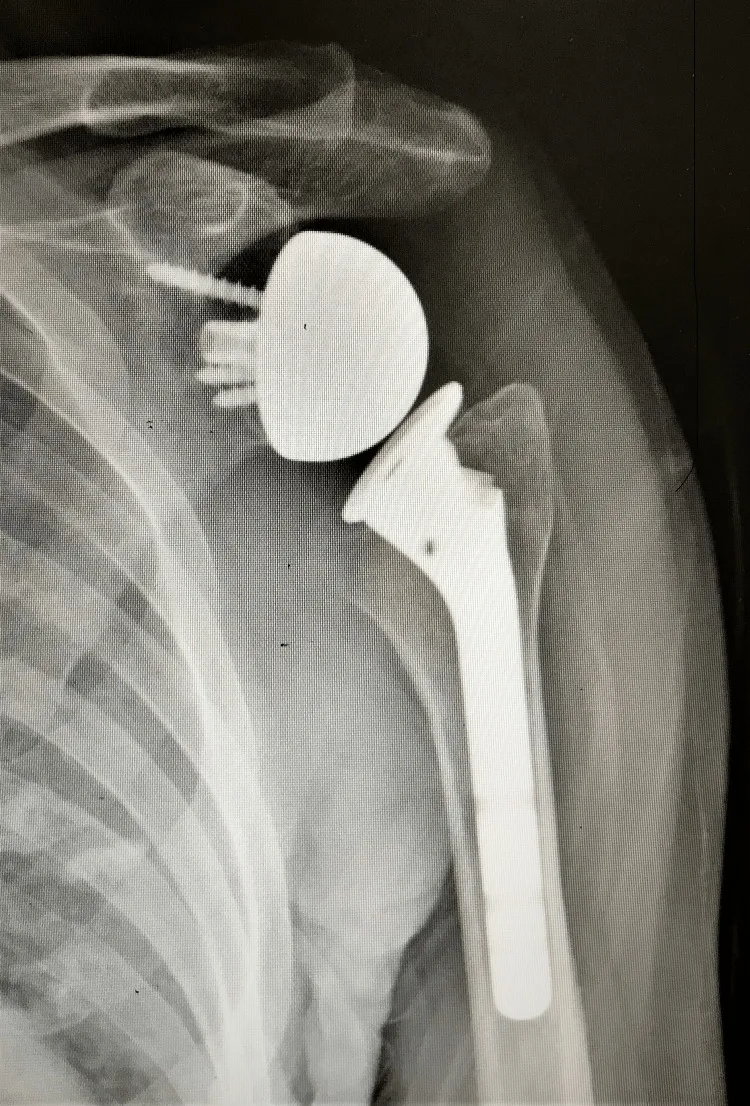
A reverse total shoulder arthroplasty (RSA) solves the problem by reversing the anatomy.
How a reverse shoulder works
- A metal ball (glenosphere) is fixed to the shoulder blade, where the socket was
- A cup is fixed to the top of the arm bone, where the ball was
- This shifts the centre of rotation, tensioning the deltoid so it can lift the arm without the rotator cuff
The result is a stable shoulder that lifts, even when the cuff is gone.
Who is it for?
- Cuff tear arthropathy: arthritis after a long-standing massive rotator cuff tear
- Massive, irreparable rotator cuff tears with a "pseudoparalytic" arm that cannot be lifted
- Complex proximal humerus fractures in older patients, where the bone and tendon attachments cannot be reliably fixed
- Failed previous shoulder replacement or failed cuff repair
- Severe arthritis with bone loss of the socket
- Some cases of chronic shoulder dislocation
Assessment
- X-rays showing the ball riding up and arthritic changes
- CT scan with 3D reconstruction to measure socket wear and plan implant position precisely
- MRI in some cases to assess the rotator cuff and deltoid
- Medical assessment for anaesthesia
The operation
The operation takes about 1.5–2 hours under general anaesthesia with a nerve block for pain relief. Through an incision at the front of the shoulder, the worn surfaces are prepared and the reverse implants are fixed. Planning on a 3D CT scan helps position the components accurately. Most patients stay in hospital for 2–3 days.
See a real case
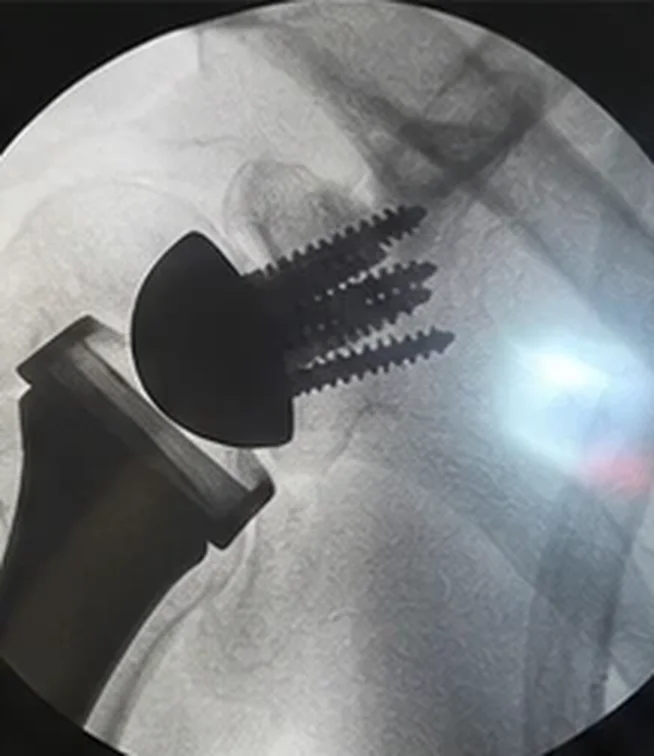
Shared with written patient consent, identifying details removed. Individual outcomes vary.
Recovery
Typical timeline in my practice; your plan may differ.
| Time | What to expect |
|---|---|
| 0–4 weeks | Sling for comfort; gentle assisted movement guided by physiotherapy |
| 4–6 weeks | Sling discontinued; active movement for daily tasks |
| 6–12 weeks | Progressive strengthening of the deltoid and shoulder-blade muscles |
| 3–6 months | Most daily and leisure activities |
| 6–12 months | Final result |
See the shoulder recovery guide.
Results
For most patients, reverse shoulder replacement relieves pain and improves the ability to lift the arm overhead: combing hair, reaching shelves and dressing. It is designed for lower-demand use, so heavy lifting and contact sports are avoided afterwards.
Risks
As with any joint replacement, risks include infection, dislocation, nerve irritation, fracture around the implant, and wear or loosening over the years. These are uncommon, and careful planning and rehabilitation keep them low.
Frequently asked questions
How is a reverse shoulder different from a normal shoulder replacement?
In an anatomic replacement, the ball stays on the arm bone and the socket on the shoulder blade, and it depends on a working rotator cuff. A reverse replacement swaps them: a ball is fixed to the socket side and a cup to the arm bone, so the deltoid muscle can lift the arm even when the rotator cuff no longer works.
Who needs a reverse shoulder replacement?
Mainly older patients with arthritis caused by a massive rotator cuff tear (cuff tear arthropathy), massive cuff tears that cannot be repaired and cause loss of arm elevation, complex shoulder fractures, and failed previous shoulder surgery.
Will I be able to lift my arm above my head?
Most patients regain the ability to lift the arm well above shoulder height, which they often could not do before surgery. Most patients get good pain relief. Rotation behind the back may remain somewhat limited.
Medical disclaimer: this article is general information, not a diagnosis. Every injury is different — please consult an orthopaedic surgeon with your scans before deciding on treatment.