

 By Dr. Himanshu Singh, MBBS, D'Ortho, DNB (Orthopaedics)
The shoulder socket (glenoid) is shallow, and every dislocation can chip or wear away its front rim. Once enough bone is lost, the socket is too small to hold the ball, and a soft-tissue Bankart repair on its own is likely to fail. The Latarjet procedure solves this by rebuilding the socket with bone.
Who needs a Latarjet?
- Significant glenoid bone loss measured on a 3D CT scan
- A failed previous Bankart repair
- An engaging Hill-Sachs lesion combined with socket bone loss
- Some high-risk contact athletes (rugby, kabaddi, wrestling, judo) with recurrent instability
- Shoulders that dislocate with minimal force or during sleep
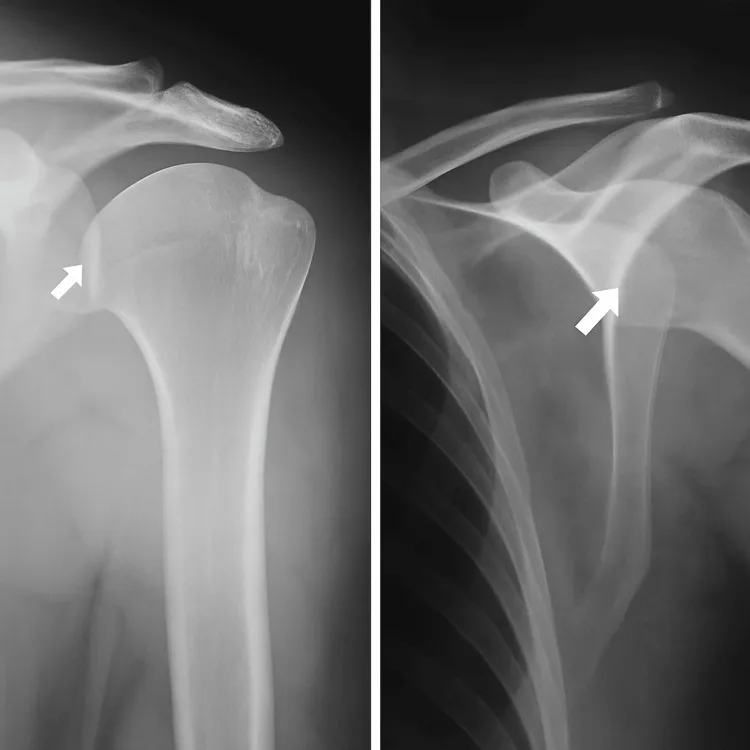
How it works: the "triple effect"
- Bone effect: the coracoid bone block widens the socket, restoring the surface lost to wear
- Sling effect: the attached tendons (conjoint tendon) act as a dynamic sling across the front of the shoulder when the arm is raised and turned out, the position in which dislocations happen
- Capsular effect: the capsule is repaired over the block
Planning
A 3D CT scan is essential. It measures the amount and position of socket bone loss and the size of any Hill-Sachs lesion, so the right operation is chosen and the bone block is placed precisely.
The operation
Under general anaesthesia with a nerve block:
- The tip of the coracoid process, with its tendons, is detached
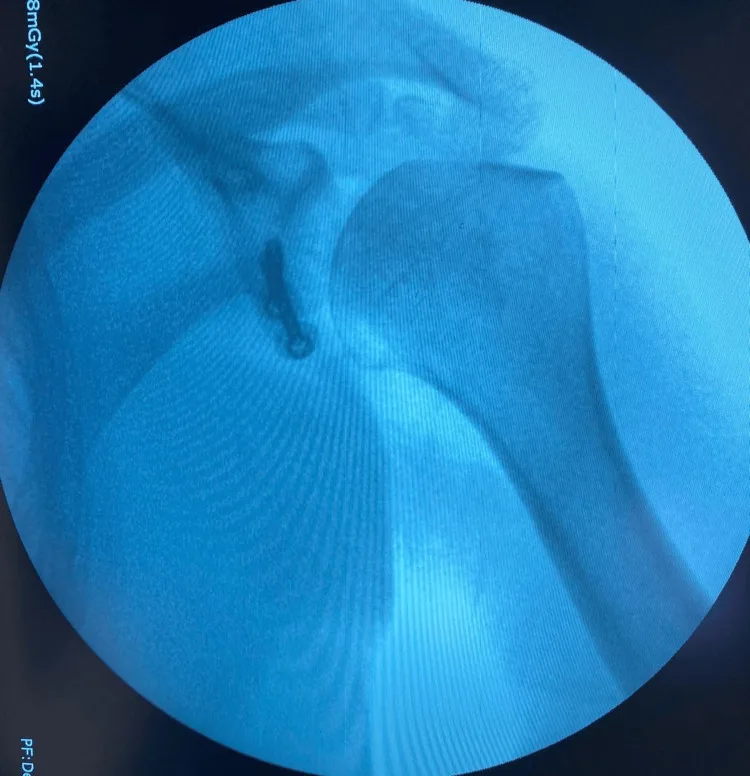
- It is passed through a split in the subscapularis muscle and fixed to the front of the glenoid with two screws, flush with the joint surface
- The capsule is repaired
When bone loss is too large or the coracoid is unsuitable, other bone grafts (for example, from the pelvis) can be used.
Recovery
Typical timeline in my practice; your plan may differ.
| Time | What to expect |
|---|---|
| 0–3 weeks | Sling; gentle movement exercises |
| 3–6 weeks | Assisted and active movement restored |
| 6–12 weeks | Strengthening; X-ray or CT check of bone healing |
| 3–4 months | Running, swimming and gym work |
| 4–6 months | Return to contact and overhead sport |
See the shoulder recovery guide.
Results
In a review of studies following patients for 10 years or more, about 3% had a further dislocation and about 8% some recurrent instability, about 85% returned to sport and 86% had good or excellent results.[1] Recurrence, residual pain and later arthritis still occur in some patients. Latarjet is also used after failed earlier surgery. Precise placement of the bone block is key to protecting the joint over the long term.
References
- Hurley ET, Jamal MS, Ali ZS, Montgomery C, Pauzenberger L, Mullett H. Long-term outcomes of the Latarjet procedure for anterior shoulder instability: a systematic review of studies at 10-year follow-up. J Shoulder Elbow Surg. 2019;28(2):e33-e39. PMID 30545784. pubmed.ncbi.nlm.nih.gov/30545784/
Frequently asked questions
When is Latarjet chosen over a Bankart repair?
Latarjet is preferred when a 3D CT shows significant bone loss from the front of the socket, when a previous Bankart repair has failed, or in some high-risk contact athletes. In these situations a soft-tissue repair alone has a higher chance of failing.
How does the Latarjet procedure work?
A small piece of bone, the coracoid with its attached tendons, is moved to the front of the socket and fixed with screws. It enlarges the socket surface, and the tendons act as a sling that supports the front of the shoulder when the arm is raised.
When can I return to sport after Latarjet?
Most athletes return to contact and overhead sport at about 4–6 months, once the bone block has healed on CT or X-ray and strength and movement have recovered.
Medical disclaimer: this article is general information, not a diagnosis. Every injury is different — please consult an orthopaedic surgeon with your scans before deciding on treatment.