

 By Dr. Himanshu Singh, MBBS, D'Ortho, DNB (Orthopaedics)
Infection after a fracture or fracture surgery — called fracture-related infection — is one of the most challenging problems in orthopaedics. When infection prevents the bone from healing, it becomes an infected non-union. Long-standing infection of bone is called chronic osteomyelitis.
Warning signs
- A sinus — a small opening that intermittently discharges pus
- Redness, warmth or swelling over the fracture or implant
- Pain that increases rather than settles with time
- Fever in early infection (often absent in chronic infection)
- A plate or nail that has become loose or visible through the skin
- A fracture that is not healing — see non-union
Why infection is difficult to treat
Bacteria attach to implants and dead bone (sequestrum) and build a protective biofilm. Antibiotics and the body's immune cells cannot effectively reach them there. This is why repeated courses of antibiotics often suppress symptoms without curing infection.
Investigations
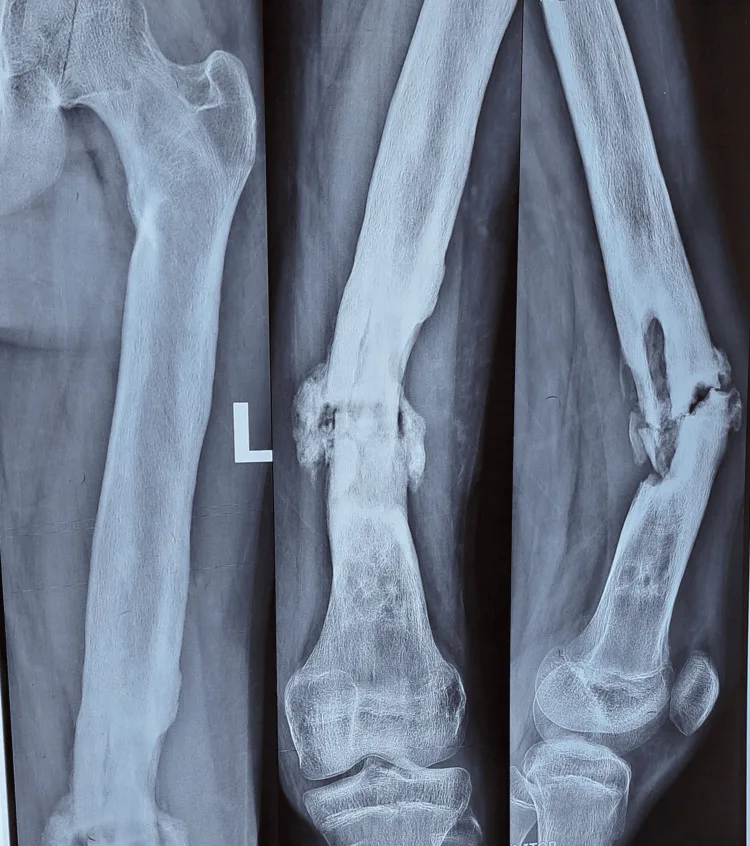
- X-rays — bone destruction, sequestrum, loose implants, non-union
- Blood tests — ESR, CRP, counts, sugar
- MRI to map infection extent, or CT to see dead bone; PET-CT in selected cases
- Deep tissue cultures taken at surgery (not swabs from the sinus, which are unreliable)
- Assessment of overall health — diabetes control, nutrition, smoking
Staged treatment
Stage 1 — Clear the infection
- Radical debridement: removal of all dead and infected bone and soft tissue until healthy, bleeding bone is reached
- Implant removal where indicated
- Local antibiotic delivery — antibiotic-loaded cement beads/spacers or absorbable carriers
- Stabilisation, frequently with an Ilizarov frame, as its wires sit away from the infected zone
- Targeted antibiotics based on culture reports, guided with an infectious disease physician when needed
Stage 2 — Reconstruct the bone
Once infection is controlled, the bone defect left behind is reconstructed — by compression, bone transport, the induced membrane technique or grafting. Soft-tissue cover may need a plastic surgery flap.
The Ilizarov advantage: the frame allows debridement, stabilisation, gap reconstruction and correction of shortening or deformity — all without leaving a large implant inside an infected bone.
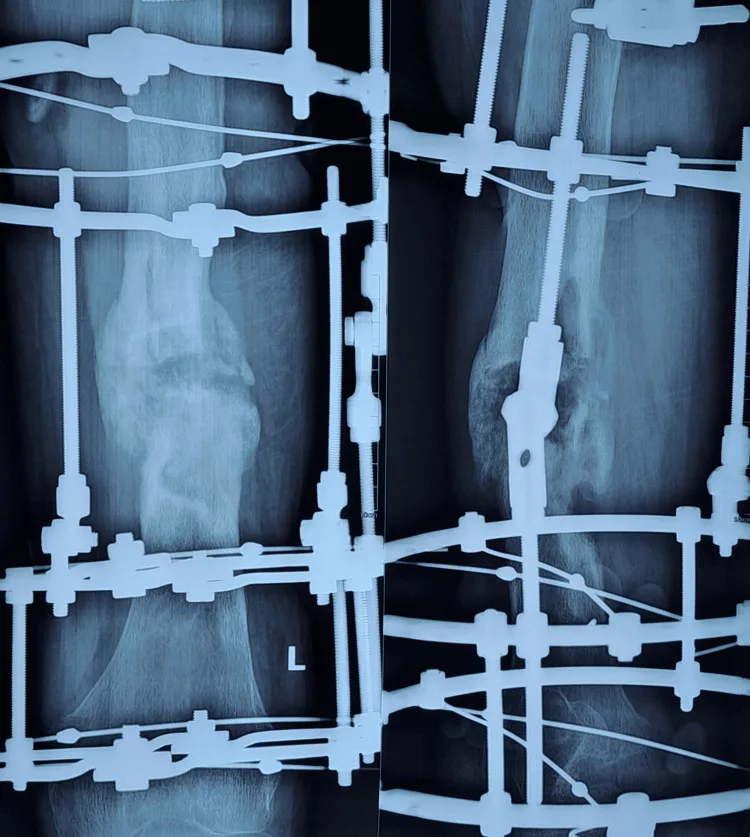
See a real case
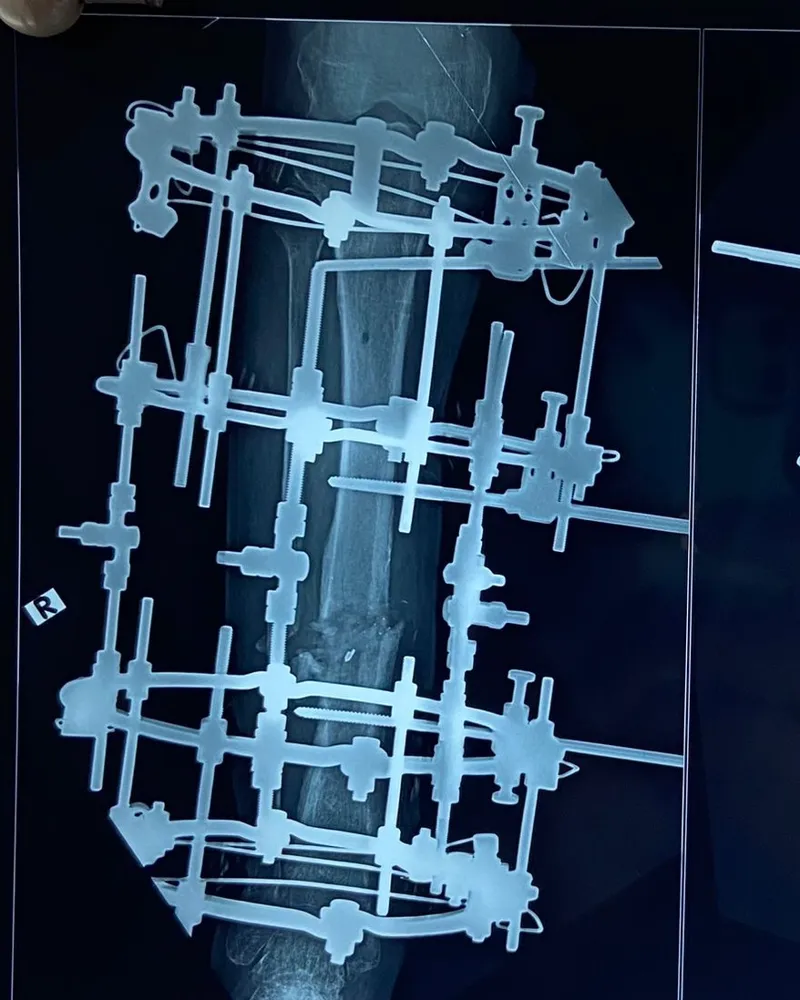
Shared with written patient consent, identifying details removed. Individual outcomes vary.
Your role in recovery
Typical timeline in my practice; your plan may differ.
- Strict blood sugar control in diabetes
- Stopping smoking — it markedly increases failure rates
- Good protein intake and vitamin D
- Pin-site care and attending every review
Outcome
With thorough debridement and staged reconstruction, the large majority of infected non-unions can be healed and limbs saved. Bring all previous culture reports, operation notes and X-rays — they are critical in planning.
Frequently asked questions
Can bone infection be cured with antibiotics alone?
Rarely, once infection is established in bone. Bacteria live in dead bone and on implants within a biofilm that antibiotics cannot penetrate. Surgical removal of dead bone and infected implants is usually essential, with antibiotics as support.
Does the implant have to be removed?
Early infections around a stable implant can sometimes be treated with debridement while retaining the implant. Late infections, loose implants or non-union generally require implant removal and reconstruction.
Can infection come back years later?
Chronic osteomyelitis can recur, which is why thorough debridement, targeted antibiotics and regular follow-up are important. Good surgical clearance significantly reduces the risk.
Medical disclaimer: this article is general information, not a diagnosis. Every injury is different — please consult an orthopaedic surgeon with your scans before deciding on treatment.