


 By Dr. Himanshu Singh, MBBS, D'Ortho, DNB (Orthopaedics)
The knee has three compartments: the inner (medial), the outer (lateral) and the kneecap (patellofemoral) joint. In many people, especially those with bow legs, arthritis wears out only the inner compartment while the rest of the knee stays healthy. A unicompartmental knee replacement (UKR), or partial knee replacement, replaces only that worn compartment.
Who is a good candidate?
- Pain on the inner side of the knee, on walking and stairs
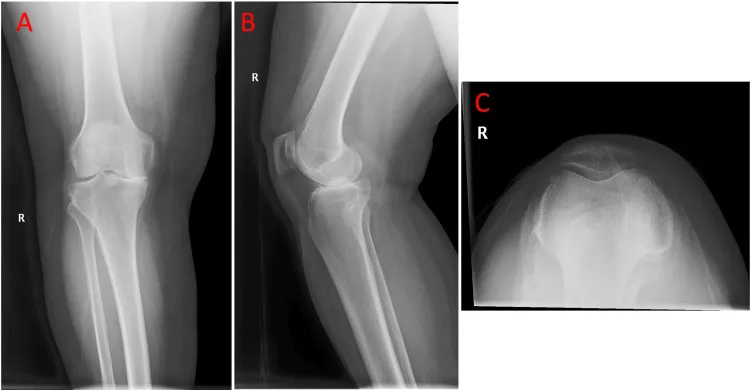
- X-rays show bone-on-bone wear in one compartment only
- The ACL is intact and the knee is stable
- The bow-leg deformity is correctable, not fixed
- Good range of movement (bends well, nearly straightens fully)
- No inflammatory arthritis such as rheumatoid arthritis
Stress X-rays and an examination decide suitability. An MRI is sometimes added to check the ligaments and the other compartments.
Advantages over a total knee replacement
- Smaller incision and less bone removed
- Both cruciate ligaments are preserved, so the knee moves and feels more natural
- Less pain and blood loss, with a shorter hospital stay (often 1–2 days)
- Faster rehabilitation and better bending, helpful for squatting and sitting cross-legged
- Lower risk of serious complications than a total knee replacement
The operation
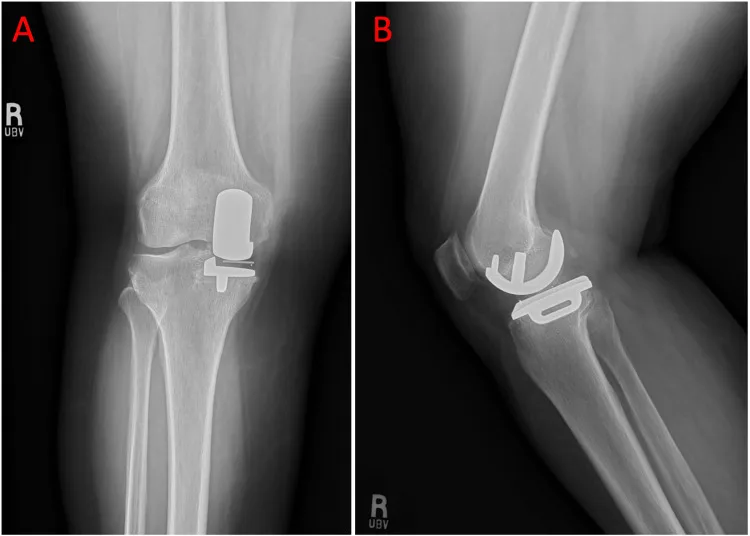
Under spinal anaesthesia, the worn surfaces on one side of the knee are resurfaced with metal components and a polyethylene bearing. Ligament balance is restored so the bow leg straightens to its natural, pre-arthritic alignment rather than being over-corrected.
Recovery
Typical timeline in my practice; your plan may differ.
- Walking with support on the day of surgery
- Discharge in 1–2 days
- Walking independently in about 2–4 weeks
- Most daily activities by 6 weeks
- Return to cycling, swimming and golf after about 3 months
UKR, HTO or total knee replacement?
These treatments overlap, and the choice depends on age, activity, alignment and the pattern of wear:
- High tibial osteotomy keeps your own joint; it suits younger, very active patients with bow legs and less severe arthritis
- UKR suits bone-on-bone wear in one compartment, with intact ligaments
- Total knee replacement suits arthritis in more than one compartment, fixed deformity or ligament damage
How long does it last?
Modern partial knee replacements give lasting results for most patients, often 15 years or more. Should arthritis later progress elsewhere in the knee, it can be converted to a total knee replacement.
Frequently asked questions
Who is suitable for a partial knee replacement?
Patients whose arthritis is confined to one compartment of the knee, usually the inner (medial) side, with a healthy ACL, a deformity that corrects, good knee bending and healthy cartilage elsewhere. Special X-rays and examination confirm suitability.
Is a partial knee replacement better than a total knee replacement?
For the right patient it offers a quicker recovery, less pain, better bending and a knee that feels more natural, because the healthy parts and the cruciate ligaments are kept. It is not suitable when arthritis involves more than one compartment.
Can a partial knee be converted to a total knee later?
Yes. If arthritis develops in the rest of the knee years later, a partial knee replacement can be revised to a total knee replacement.
Medical disclaimer: this article is general information, not a diagnosis. Every injury is different — please consult an orthopaedic surgeon with your scans before deciding on treatment.