Presentation: a woman in her mid-thirties whose wrist (distal radius) fracture had been operated at another hospital. She had ongoing pain, stiffness and a visible deformity of the wrist.
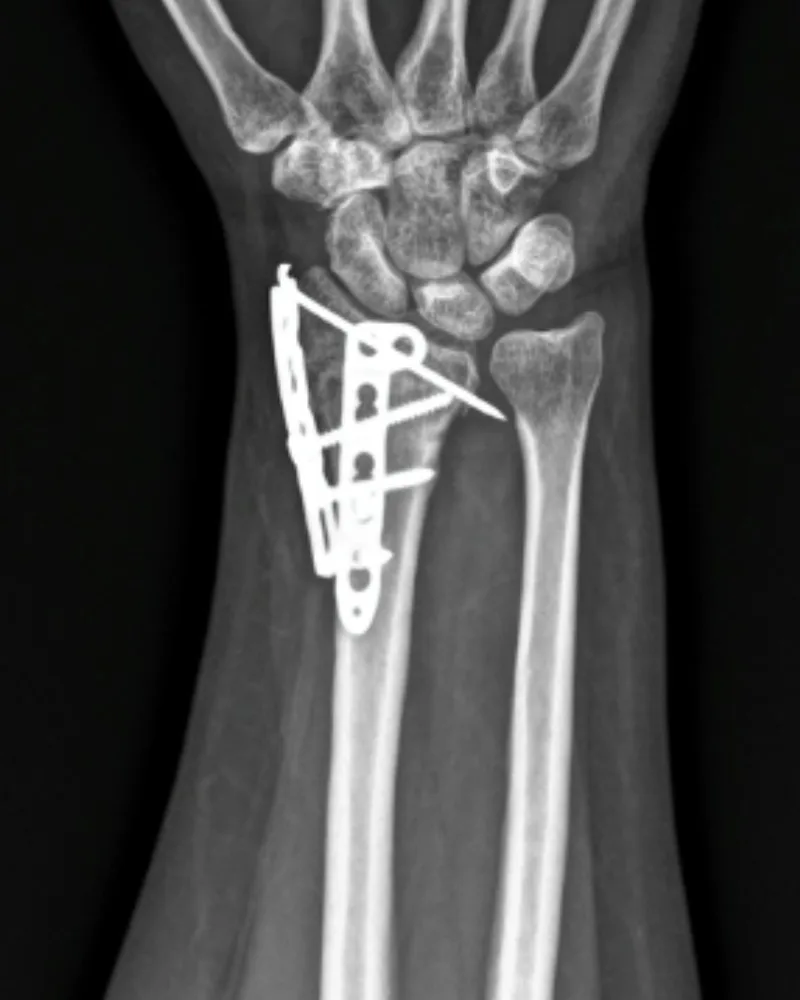
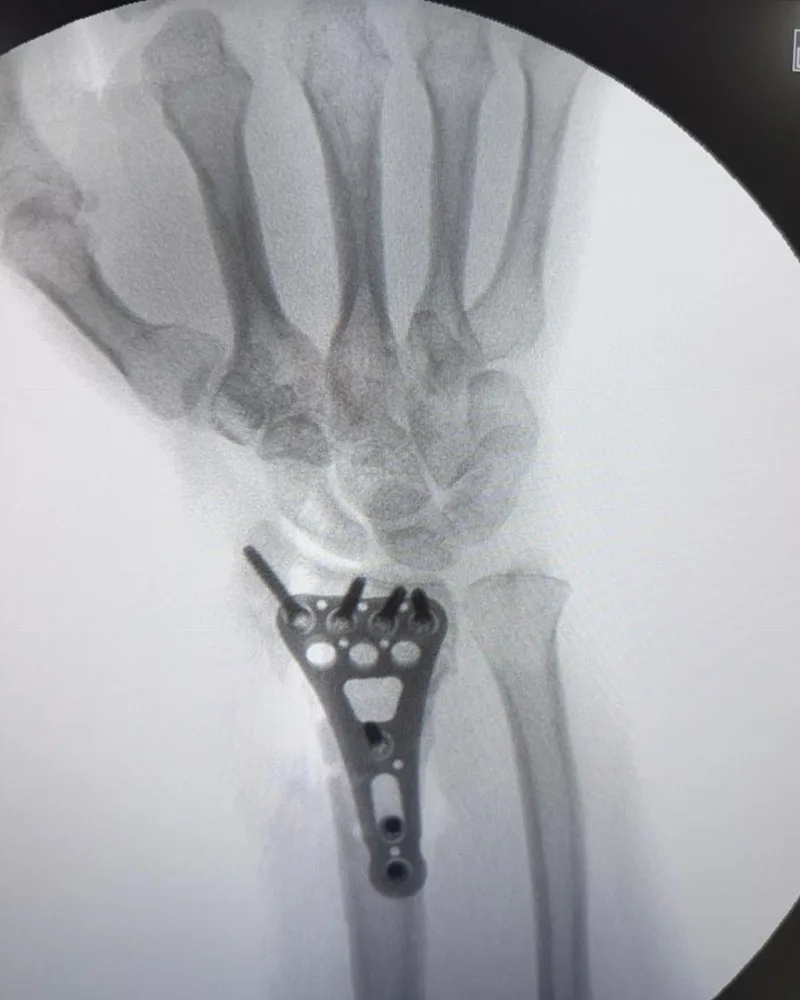
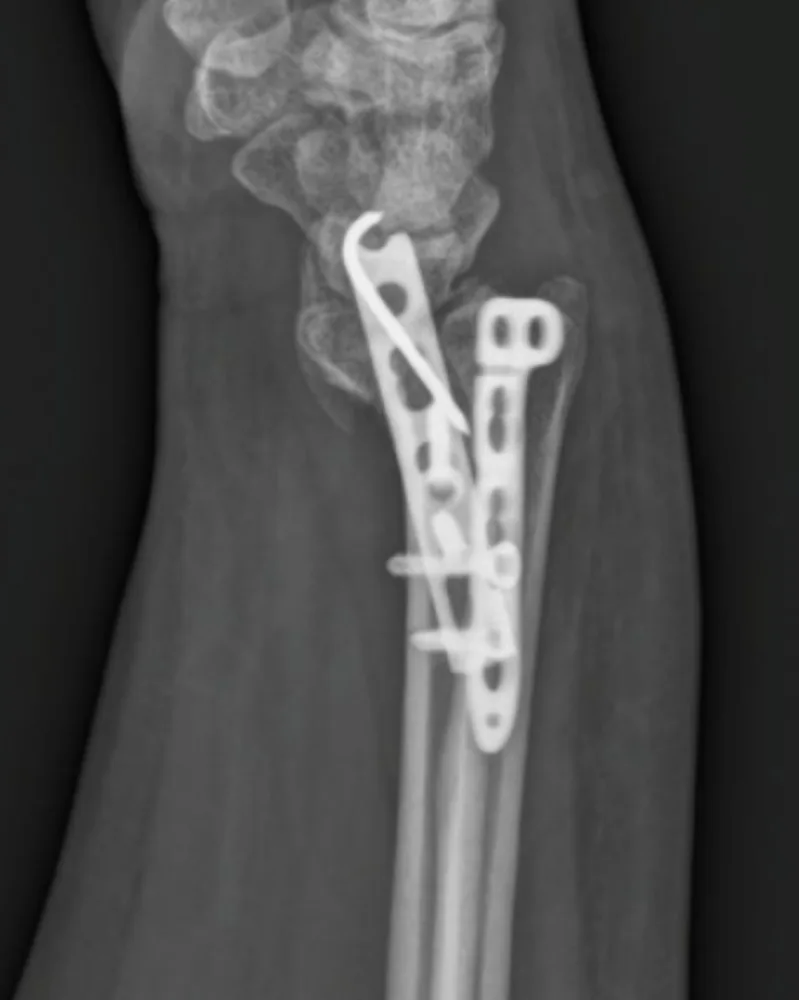
Findings: X-rays in both views (AP and lateral) and a 3D CT scan showed the fracture had been fixed in a poor position (mal-fixed). The joint surface and the normal tilt and length of the radius had not been restored, and the implants were not holding a correct reduction.
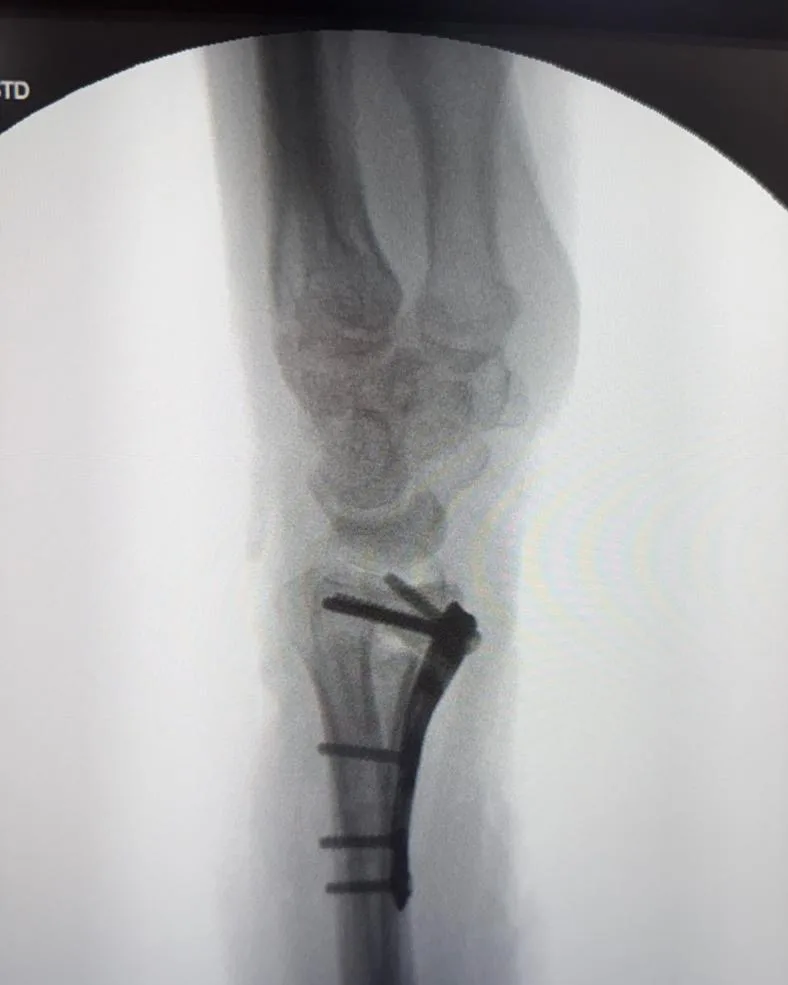
Procedure: revision fixation two months after the first surgery: removal of the previous implants, freeing and re-positioning the fracture fragments to restore the normal angle, length and joint surface of the radius, and fixation with a volar locking plate.
Recovery: early finger and wrist movement under guidance, with X-rays to confirm healing in the corrected position.
Why it matters: a fracture fixed in a poor position is easier to correct before it fully heals. Revising it early, while the fracture line can still be re-opened, is usually simpler than correcting a mature malunion later. Read more about malunion correction.
For patient education only. Illustrative problems are shared with written patient consent, with identifying details removed. Every patient is different and individual outcomes vary.



 Problem
 Solution